Suppose tonight’s recipe begins: “Scald the flamingo.” That’s not satire. Ancient Rome left behind a cookbook filled with birds, dormice, fish sauce, honey, vinegar and enough pepper to make you wonder what exactly was happening at dinner.
So, what exactly was Roman dinner?
The cookbook is known as De re coquinaria, or The Art of Cooking, and is commonly called Apicius. It was probably compiled in late antiquity, around the fourth or fifth century, from earlier material and attributed to Marcus Gavius Apicius, a famously extravagant Roman gourmand who lived centuries earlier.
And yes, the flamingo is real.
One recipe calls for parboiling the bird with dill and vinegar, then finishing it with leeks and coriander and covering it with a sauce of pepper, cumin, mint, dates and wine. Parrot? Same basic treatment. Elsewhere, a dormouse is stuffed with pork, nuts and seasoning before being roasted or boiled.

But Apicius isn’t simply a catalog of Roman weirdness. Alongside the show-off dishes are stews, eggs, pork, vegetables, fruits, herbs, wine, vinegar and honey. Some combinations seem alien. Others are close enough to modern cooking to be mildly unsettling.
And then comes the stranger part: the cookbook survived.
What we have isn’t Apicius’ personal kitchen notebook. It is a later compilation preserved because generations of scribes kept copying it. A major surviving manuscript now in the Vatican Library was copied in the ninth century, roughly four centuries after the Western Roman Empire disappeared.
Empires fall. Apparently recipes are harder to kill.

Featured Country: Italy
Modern Italian cooking would look startlingly unfamiliar to an ancient Roman. Tomatoes had not arrived from the Americas, and the pasta culture we recognize today had centuries of development ahead of it. Italy’s food story isn’t one straight line from Rome to red sauce. It’s centuries of new ingredients, regional traditions and continual reinvention. Explore Italy on CountryCuisines
Start Cooking: Italy
Enough flamingo. Here are three Italian dishes you can actually cook tonight, from our CountryCuisines Italian cuisine collection. Buon appetito!

Priest Stranglers Pasta
Hand-rolled strozzapreti meets sausage, tomato, wine & herbs, plus one of Italy’s more colorful pasta names.

Fast Focaccia Bread
Golden, olive-oil-rich focaccia without turning bread baking into an overnight infrastructure project. A modern miracle.

Osso Buco Milanese
Veal shanks braised slowly with vegetables and wine, then brightened with gremolata. Considerably easier to source than flamingo.
Food Trivia: Rome Wasn’t First

Here’s the catch: Rome doesn’t have the oldest surviving written recipes. Those take us much farther east and more than 1,500 years further back.
Yale’s Babylonian Collection holds clay tablets dating to about 1750 BCE containing the world’s oldest known written recipes, including meat, vegetable and stew preparations. The instructions were pressed into wet clay in cuneiform rather than written in a book. Few cooks could read the script, so researchers think the tablets may have documented elite culinary practice rather than sat beside the ancient equivalent of a greasy stovetop.
Think You Know Italian Food?

We’ve dragged you through Roman flamingo, stuffed dormice and 4,000-year-old clay-tablet cooking. You’ve earned something easier. Or maybe not. Take our Mamma Mia! How Well Do You Know Italian Food? quiz today and see whether your knowledge of modern Italy holds up better than your appetite for ancient Rome.
Ready to take the test? Explore all CountryCuisines quizzes.
Favorite Find: Read the Real Thing

Want to see the cookbook rather than merely hear about it? The Vatican Library has digitized its ninth-century manuscript of De re coquinaria, commonly known as Apicius, and you can flip through the pages online for free.
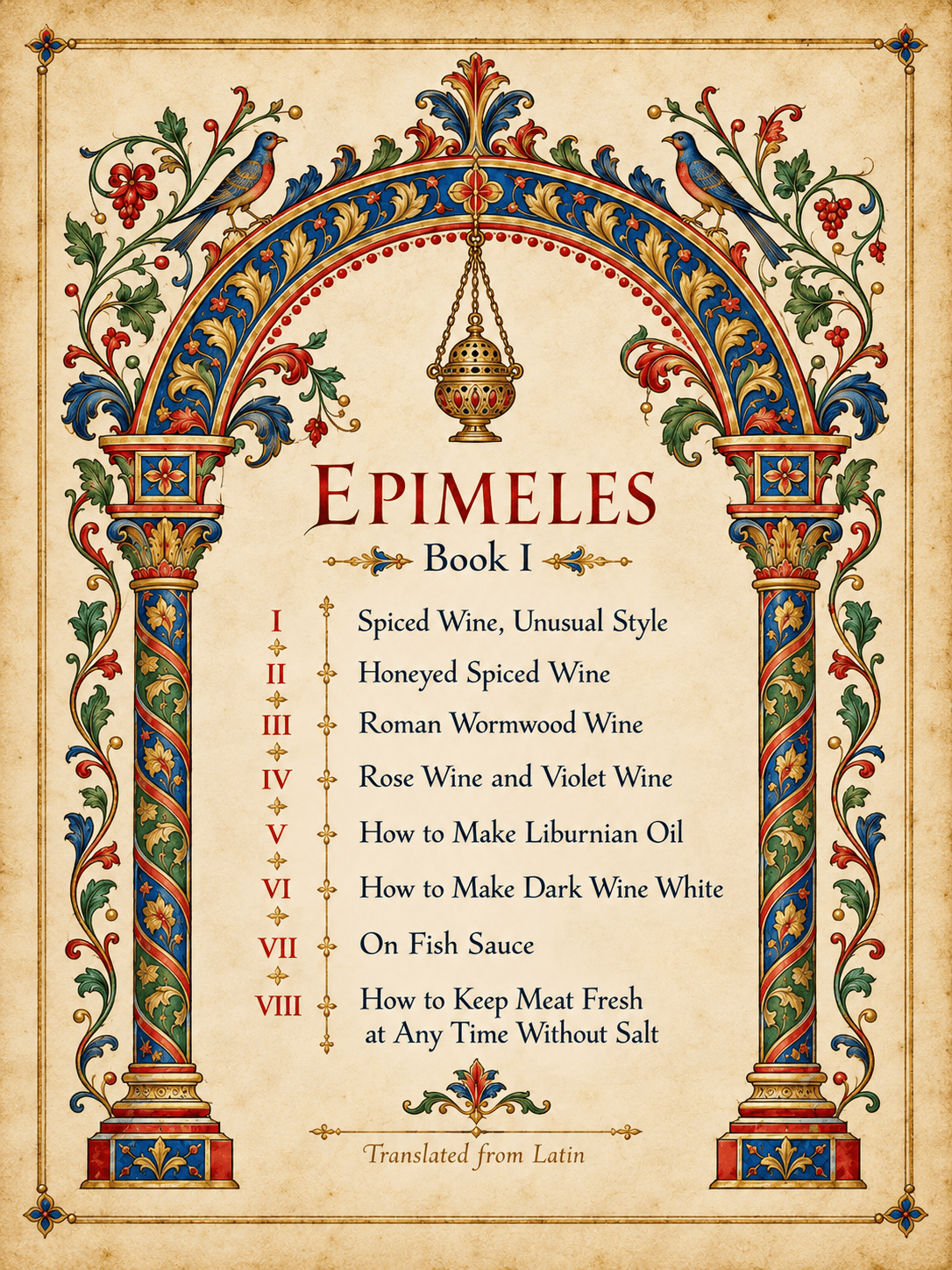
The original page is beautiful, but unless your Latin is unusually fresh, not terribly helpful at dinner. We recreated its opening list in English so you can easily read about spiced wine, wormwood wine, fish sauce and even instructions for keeping meat fresh without salt. Click here to view an English translation and our reconstruction.
The opening page of Book I, Epimeles, is especially revealing. Instead of launching straight into flamingo and dormice, it starts with practical kitchen material: spiced and honeyed wines, rose and violet wine, flavored oil, fish sauce and methods for preserving meat. In other words, ancient Roman cooks worried about pantry management too.
The Latin may slow you down, but seeing a manuscript copied more than 1,000 years ago, complete with decorated pages and carefully organized recipes, is worth the visit. Explore the digitized Apicius manuscript at the Vatican Library
Share The Menu
Know somebody who thinks dinner has become too adventurous? Send them a Roman flamingo recipe and reset the scale. Better yet, forward them The Menu. Every week we dig into the strange histories, overlooked dishes and genuinely useful recipes hiding behind what the world eats. No flamingo required. Usually.
Next Week

Next week: From ancient Rome to wartime Canada. How Puffed Wheat Squares became a Prairie classic with a surprisingly practical origin story.