
Greenland • Regional Dish • Beverage
Greenlandic Coffee
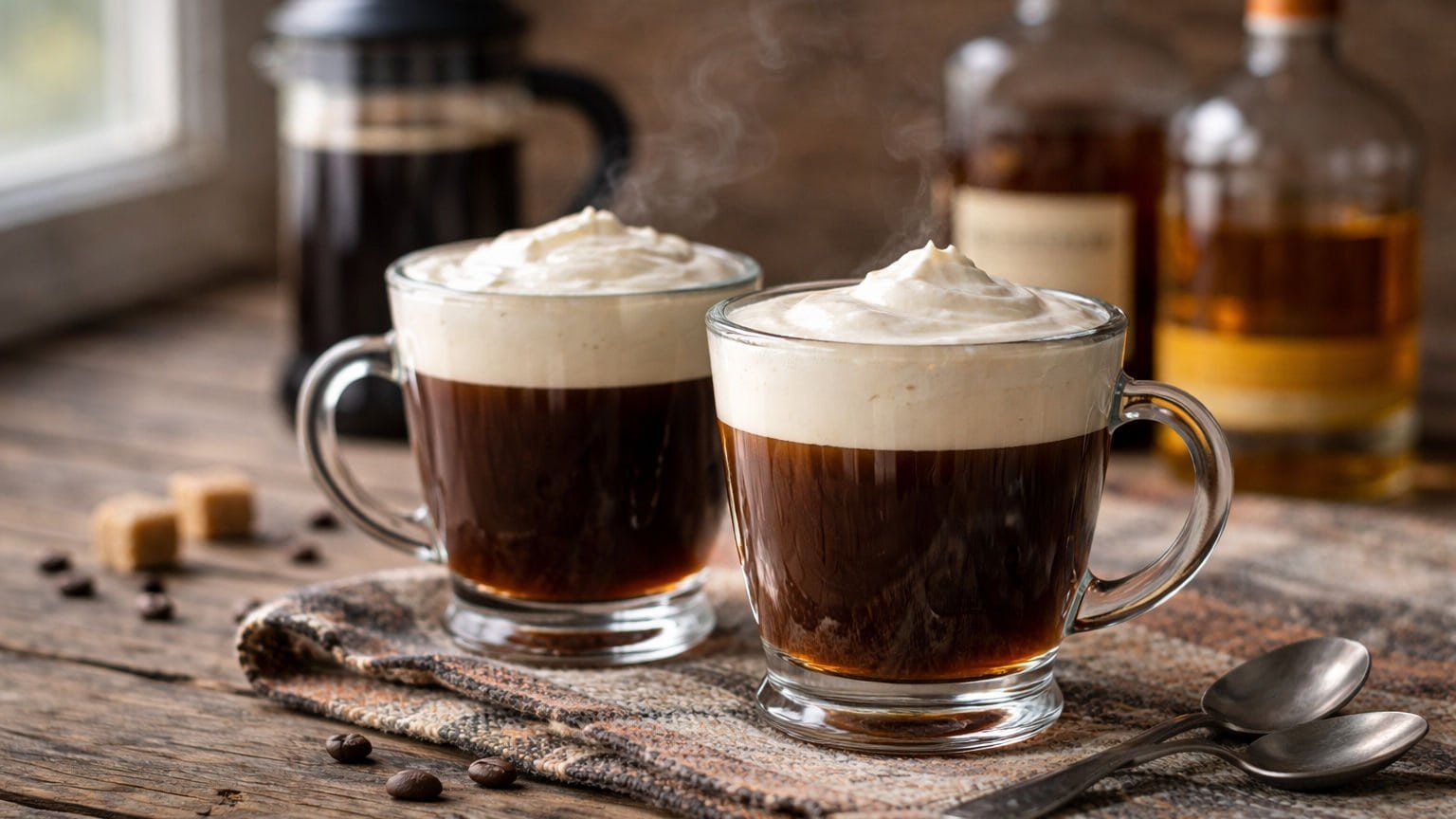
A layered coffee finished with whisky and whipped cream, traditionally lit before serving. Warm, bold and designed for long Arctic evenings.
Instructions
- Brew the coffee strong and hot, then divide it evenly between 2 heatproof glasses.
- Add the whisky, coffee liqueur, and orange liqueur to the glasses. Stir gently to combine.
- Lightly whip the cold cream until thickened but still pourable. Do not overwhip. The top layer should float, not sit there like frosting with ambition issues.
- Slowly pour or spoon the cream over the back of a spoon so it settles as a layer on top of the coffee mixture.
- Serve immediately. Drink through the cream layer without stirring so the hot coffee and cool cream meet gradually in the glass.
Cultural Context
Greenlandic Coffee brings more drama than the average cold-weather drink, and good for it. Served in a clear glass with dark coffee and cream layers, it looks like hospitality decided to dress properly for dinner.
It’s often served after a meal, where it works as both coffee and small ceremony. Some versions are briefly ignited at special gatherings as a nod to the Northern Lights, which is a strong hint this isn’t break-room coffee. It’s built for cold weather, conversation and a meal ending that refuses to fade quietly.
Fun Fact
The layered, flaming presentation can represent the Arctic, Northern lights.
Cook’s Tip
Dark rum can replace the whisky. If needed, replace the coffee liqueur with 10 ml sugar syrup plus 10 ml extra coffee. For a non-alcoholic version, omit the spirits and use 10 ml caramel syrup instead. The key detail is the cream's texture: lightly whipped and still pourable, so it floats cleanly rather than sinking into the drink.
Trivia
In traditional Greenlandic cooking, after meat or fish is boiled in seawater, it's often poured onto a large flat stone where the water evaporates, leaving the food perfectly seasoned to be eaten directly off the rock.
More Greenland Recipes
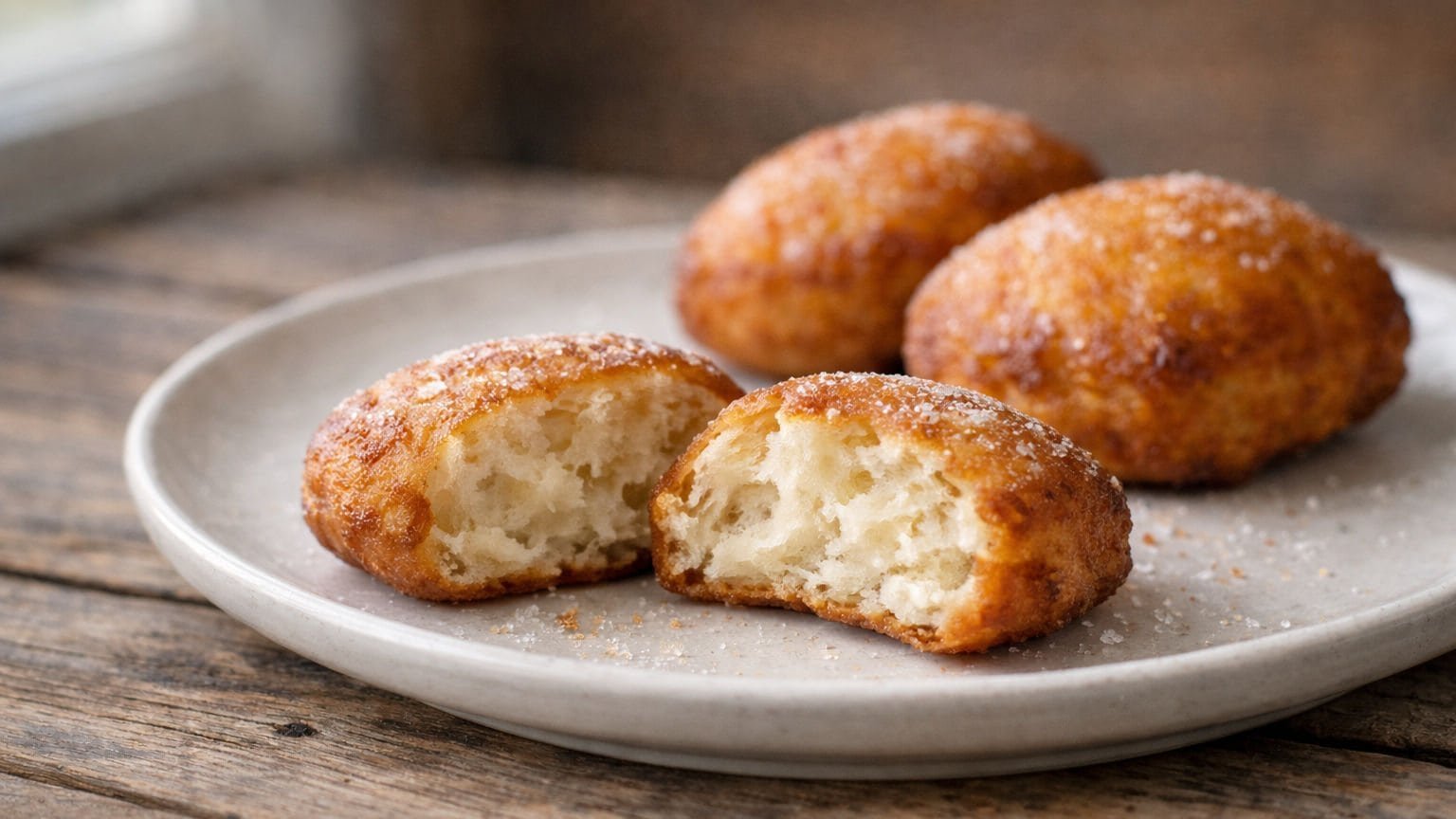
Kalaallit Kaagiat – Greenlandic Cake
Simple fried dough cakes puff and brown quickly for a crisp shell, soft centre, and lightly sweet finish.
View Recipe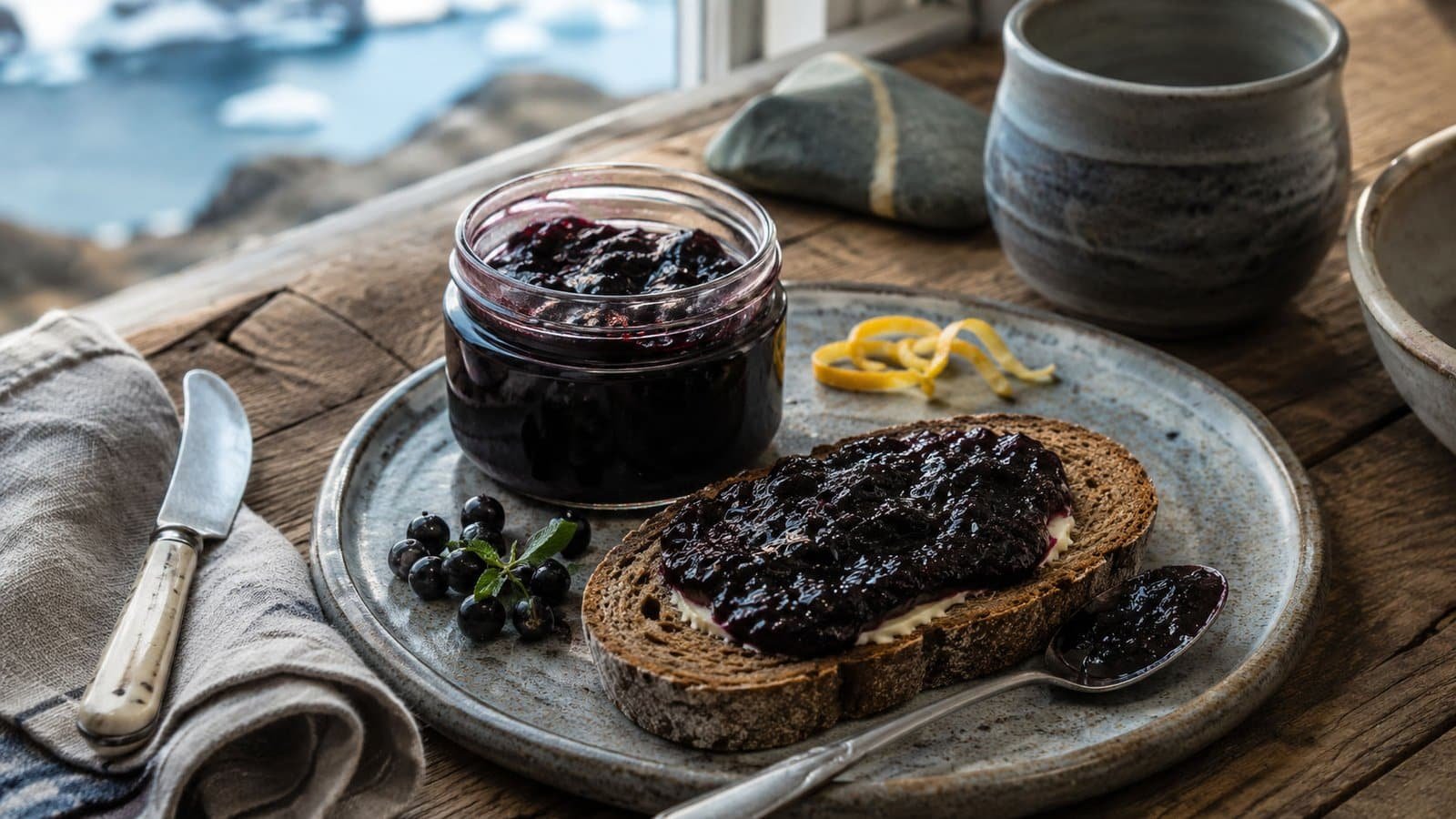
Greenlandic Paarnat (Crowberry) Jam
Wild crowberries, lemon and apple cook into a dark, tart-sweet Greenlandic jam made for bread, desserts and savory pairings.
View Recipe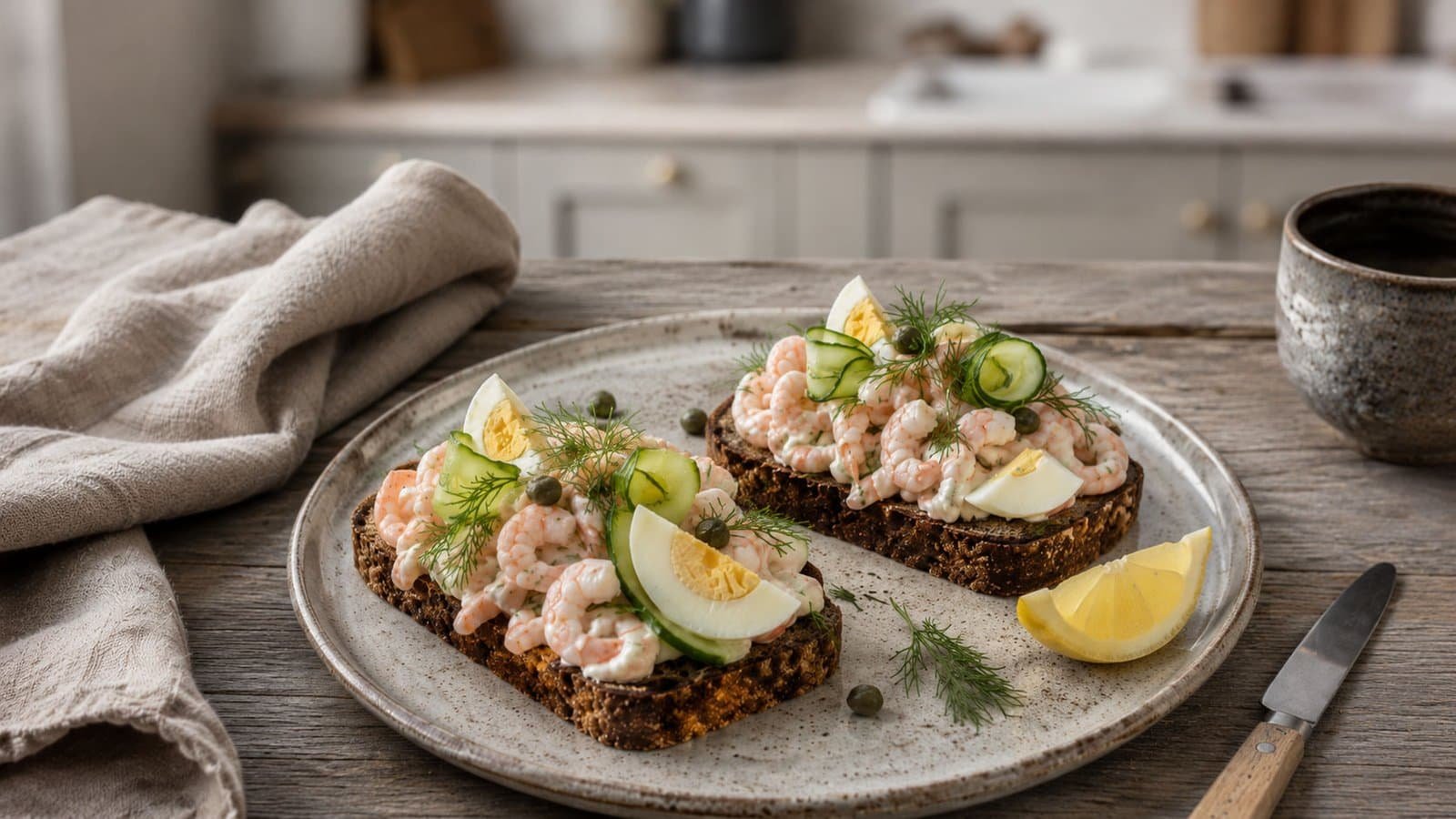
Greenlandic Shrimp Salad on Rye Bread
Tender cold-water shrimp, lemony dill dressing, cucumber and egg make this open-faced rye sandwich fresh, filling and fast.
View Recipe