
South Korea • Regional Dish • Side Dish
Kimchi Fried Rice
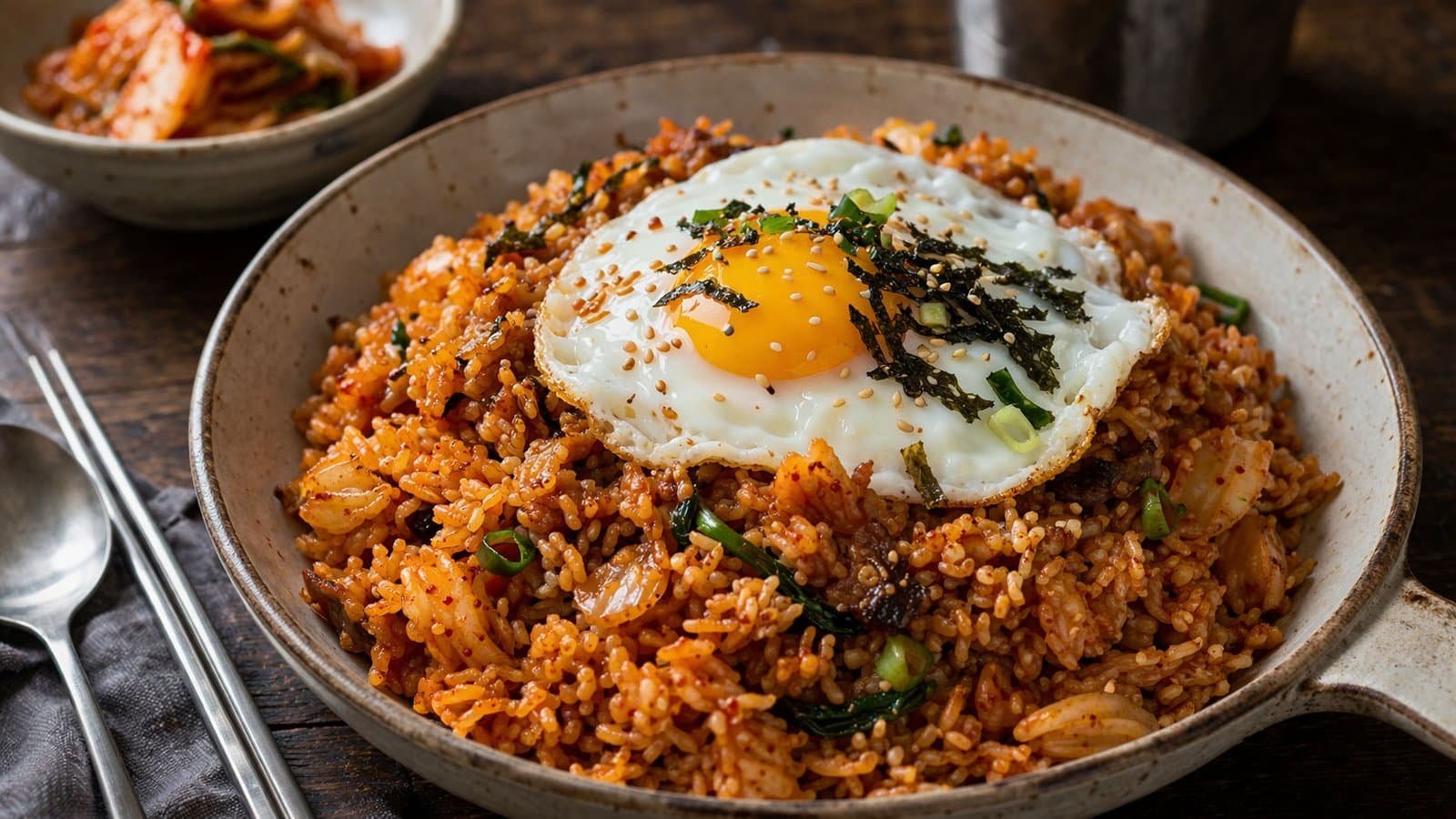
Kimchi fried rice is Korea's ultimate leftover upgrade: bold, spicy, savory rice with crispy edges and a fried egg on top.
Instructions
- Break up the rice with your hands or a fork so there are no large clumps. Cold, slightly dry rice works best.
- Heat the oil in a large skillet over medium heat. Add the pork or bacon if using and cook for 3 to 4 minutes until lightly crisp and the fat has rendered.
- Add the onion and cook for 2 minutes until softened. Stir in the garlic and cook for another 30 seconds.
- Add the chopped kimchi and cook for 2 to 3 minutes, letting it soften and deepen in flavor.
- Stir in the gochujang, kimchi juice, soy sauce, and sugar. Cook for 1 to 2 minutes until everything smells rich and slightly caramelized.
- Add the rice and toss well to coat every grain in the sauce. Press the rice lightly into the pan and let it cook undisturbed for 1 to 2 minutes to develop a bit of crisp texture.
- Stir, then repeat once more if you want more toasted bits. Add the green onions and sesame oil and mix through.
- In a separate pan, fry the eggs to your preferred doneness. Spoon the rice into bowls, top with a fried egg, and finish with sesame seeds and seaweed strips.
Cultural Context
Kimchi fried rice, or kimchi bokkeumbap, is a staple home-cooked dish in South Korea, often made to use leftover rice and well-fermented kimchi. The combination of tangy kimchi, rice, and gochujang creates a deeply savory, slightly spicy dish that is both practical and satisfying. It is commonly topped with a fried egg and served as a quick meal rather than a formal dish, which is exactly why people keep coming back to it.
Fun Fact
Kimchi fried rice is one of those dishes that improves as your kimchi ages. What might be "too sour" to eat on its own suddenly becomes perfect once it hits a hot pan.
Cook’s Tip
Day-old rice is key. Fresh rice is too soft and turns mushy. Well-fermented kimchi gives the best depth and tang. If your kimchi is mild, let it cook a little longer to build flavor. Pork adds richness, but the dish works perfectly without it for a lighter version. Do not skip the kimchi juice. That is where a lot of the flavor lives. A lightly crisped bottom layer is not a mistake. It is the best part.
Trivia
The crispy rice layer at the bottom, sometimes called nurungji-style texture, is not just acceptable – it is quietly the part everyone hopes you do not scrape off too early.
More South Korea Recipes
Korean Fried Chicken (Yangnyeom Chicken)
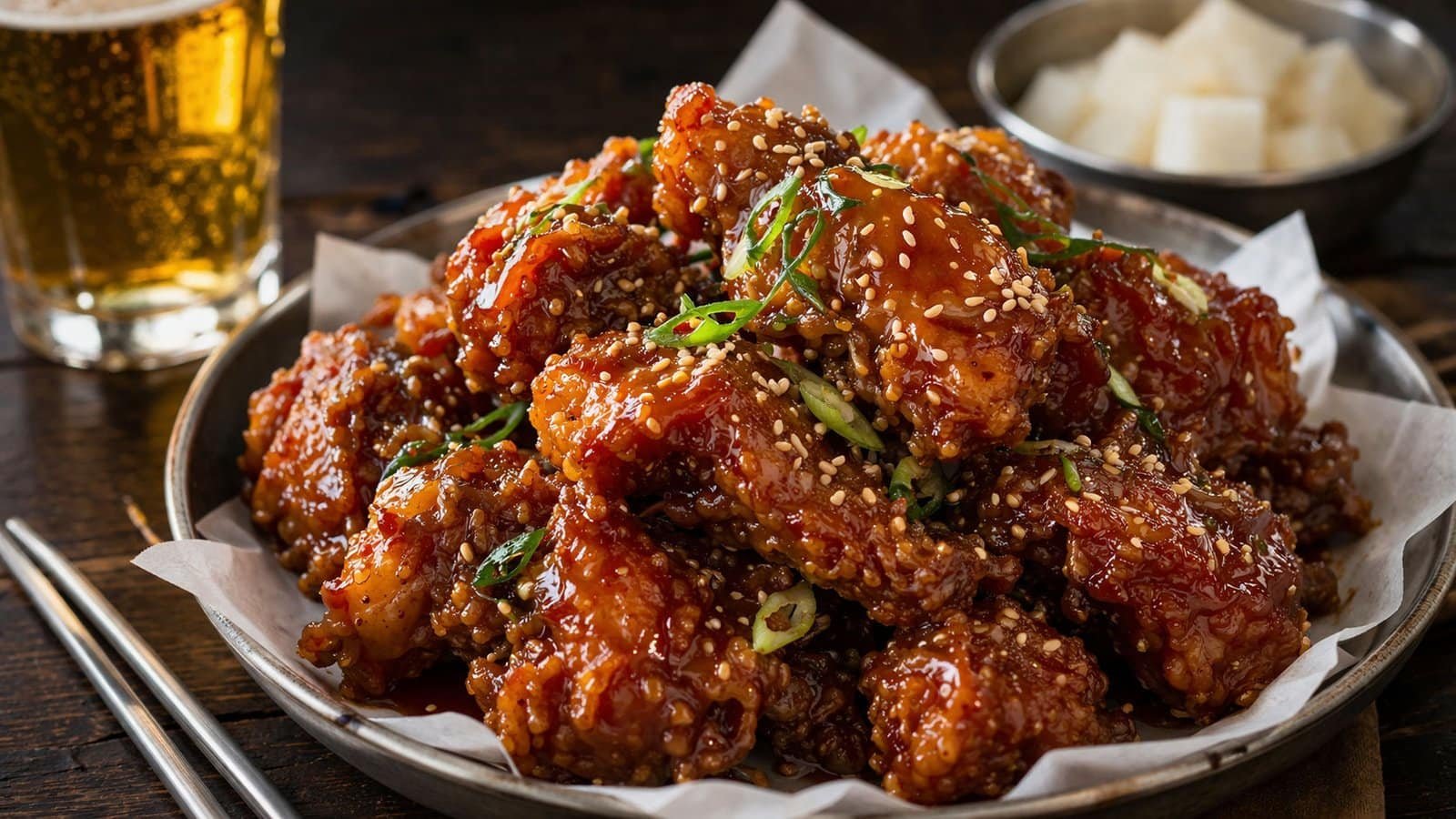
Yangnyeom chicken is Korean fried chicken at its most addictive: crackly, juicy, and coated in a glossy sweet-spicy sauce.
View Recipe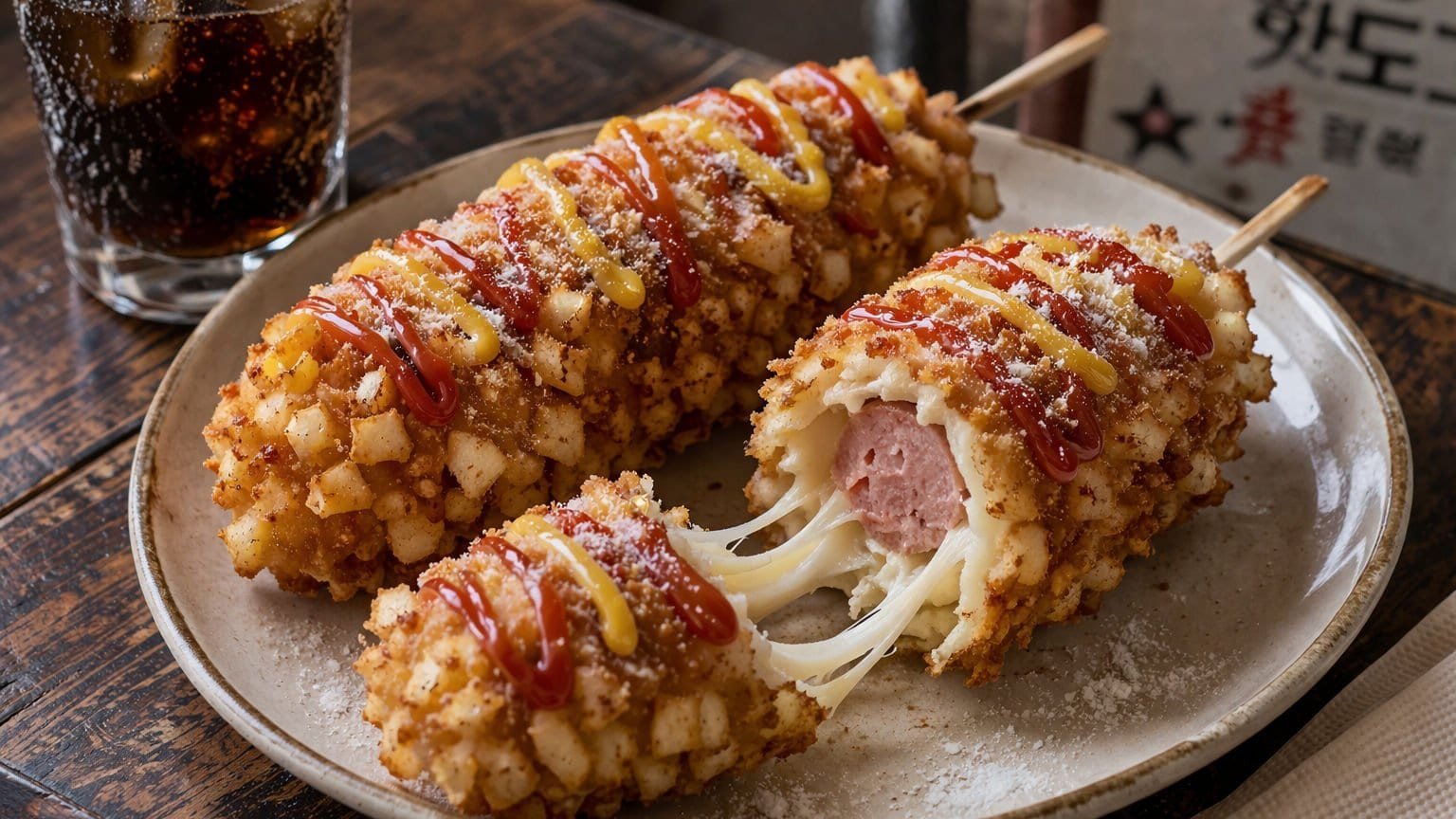
Korean Corn Dogs (Gamja Hot Dog)
Korean gamja hot dogs are crispy, chewy, potato-crusted street snacks with a sweet-savory finish and real main-character energy.
View Recipe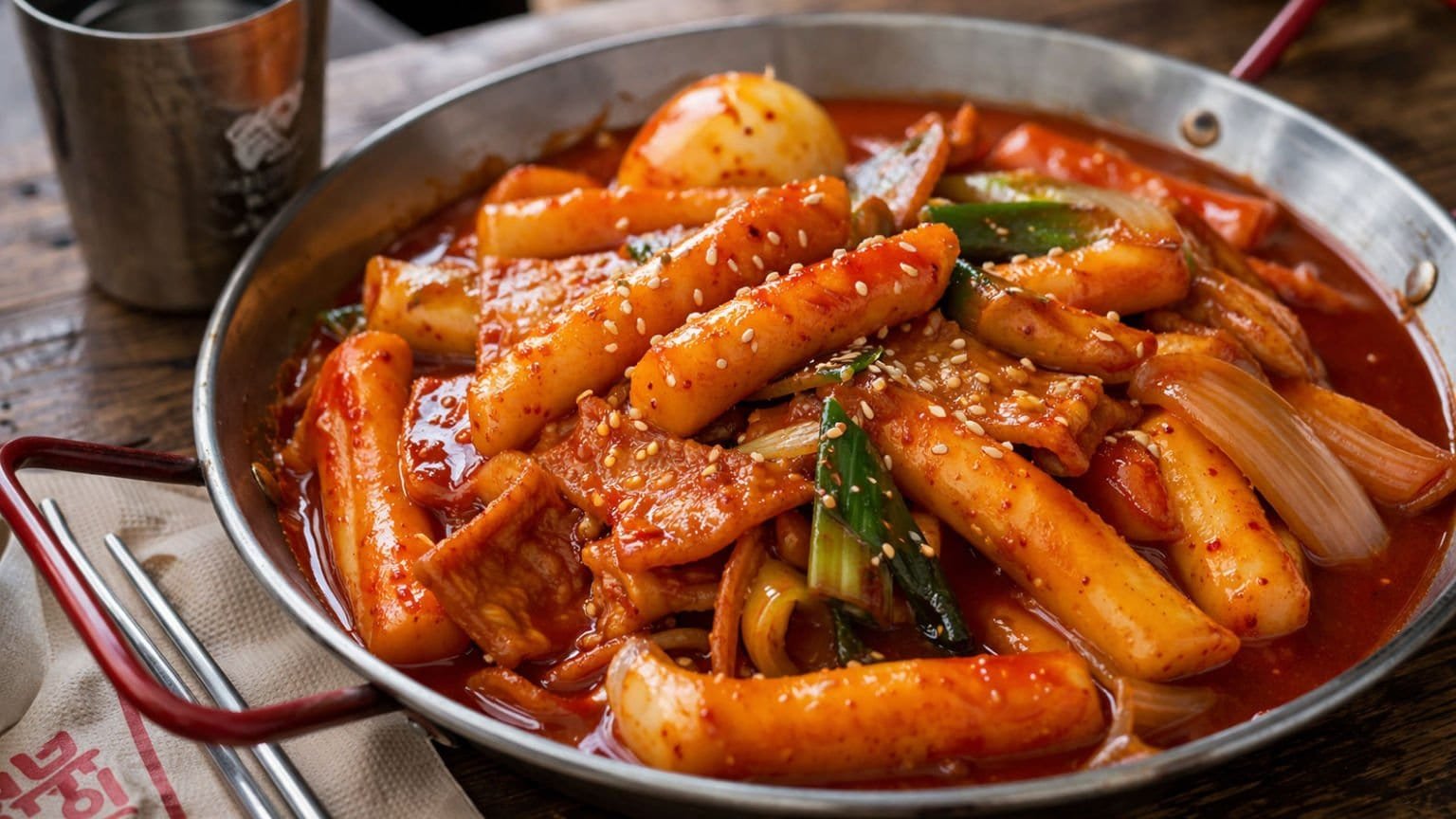
Tteokbokki (Spicy Rice Cakes)
Tteokbokki is one of Korea's most beloved street foods: chewy rice cakes simmered in a spicy, savory, slightly sweet red sauce.
View Recipe