
Greenland • Regional Dish • Stew
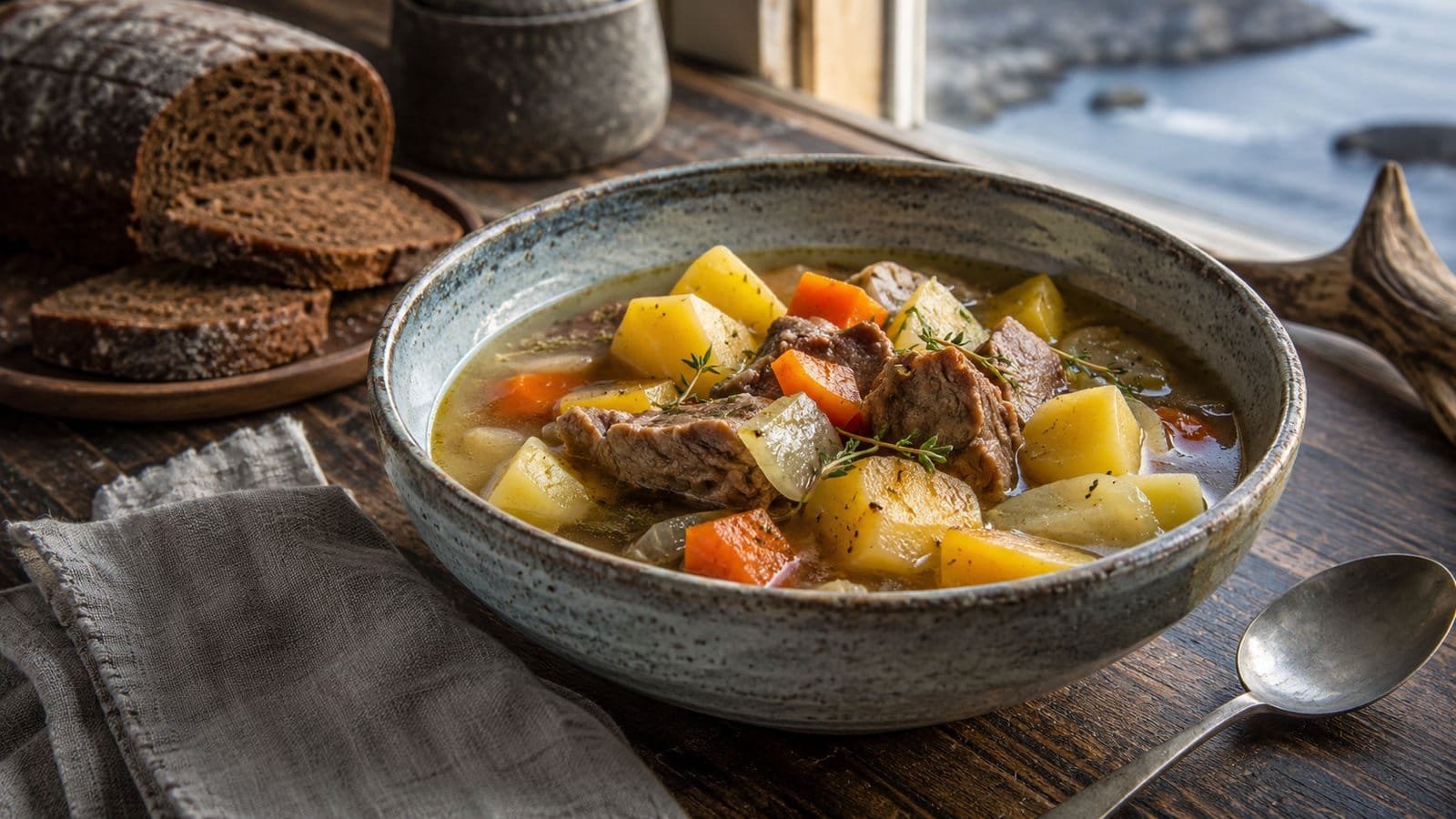
Greenlandic Kuanit Lamb Stew with Potatoes
South Greenlandic lamb, potatoes and root vegetables simmer slowly into a clear, hearty stew with clean flavor and serious warmth.
Instructions
- Place the lamb in a large heavy-bottomed pot and pour in the cold water or stock. The liquid should cover the meat by about 1 inch.
- Bring the pot slowly to a gentle boil over medium-high heat. As foam rises to the surface, skim it away with a spoon or fine-mesh skimmer.
- Reduce the heat to low. Add the onion, thyme or angelica, salt and black pepper.
- Partially cover the pot and simmer gently for 40 minutes. Avoid a hard boil, which can cloud the broth and toughen the lamb.
- While the lamb cooks, prepare the carrots, rutabaga and potatoes. Keep the potato pieces fairly large so they hold their shape.
- Stir the rinsed barley, carrots and rutabaga into the pot. Add a little more water if the ingredients are no longer mostly covered.
- Simmer uncovered for 15 minutes, then add the potatoes and stir gently.
- Partially cover the pot again and cook for another 30 to 35 minutes, or until the lamb is tender and the vegetables pierce easily with a fork.
- Remove any large pieces of surface fat. Taste the broth and add more salt or pepper as needed. Let the stew stand off the heat for 5 minutes, then ladle it into deep bowls with plenty of lamb, vegetables and broth in every serving.
Cultural Context
Sheep farming is concentrated in South Greenland, where milder conditions support summer grazing and limited production of potatoes and other vegetables. Lamb therefore has a real place in the region’s modern food culture alongside older hunting and fishing traditions. This stew draws on that agricultural setting and the simple, broth-based style of Greenlandic soups such as suaasat, while using farmed lamb and root vegetables. Greenlandic cooking varies by household, season, access and community, as practical food traditions usually do.
Fun Fact
South Greenlandic sheep spend the warmer months grazing across open pasture, herbs and low vegetation. That varied diet can give the lamb a distinctive flavor without requiring aggressive seasoning. In other words, the sheep have already handled much of the flavor development before the cook reaches for the pot.
Cook’s Tip
Lamb shoulder gives the richest broth, but lamb leg works well if trimmed only lightly. Replace rutabaga with turnip or parsnip, and use rolled oats instead of barley for a softer, slightly thicker broth. Angelica is used in some Greenlandic cooking but can be difficult to find, so thyme is the practical substitute. Vegetable stock adds flavor, though water keeps the broth cleaner and lets the lamb lead. Don’t brown the meat first; the gentle simmer is part of this stew’s character. Refrigerate leftovers for up to three days and reheat slowly.
Trivia
This stew skips the usual browning step. Simmering the lamb directly in water creates a lighter, clearer broth and keeps the meat’s flavor front and center. French technique may raise an eyebrow. The soup pot remains unmoved.
More Greenland Recipes
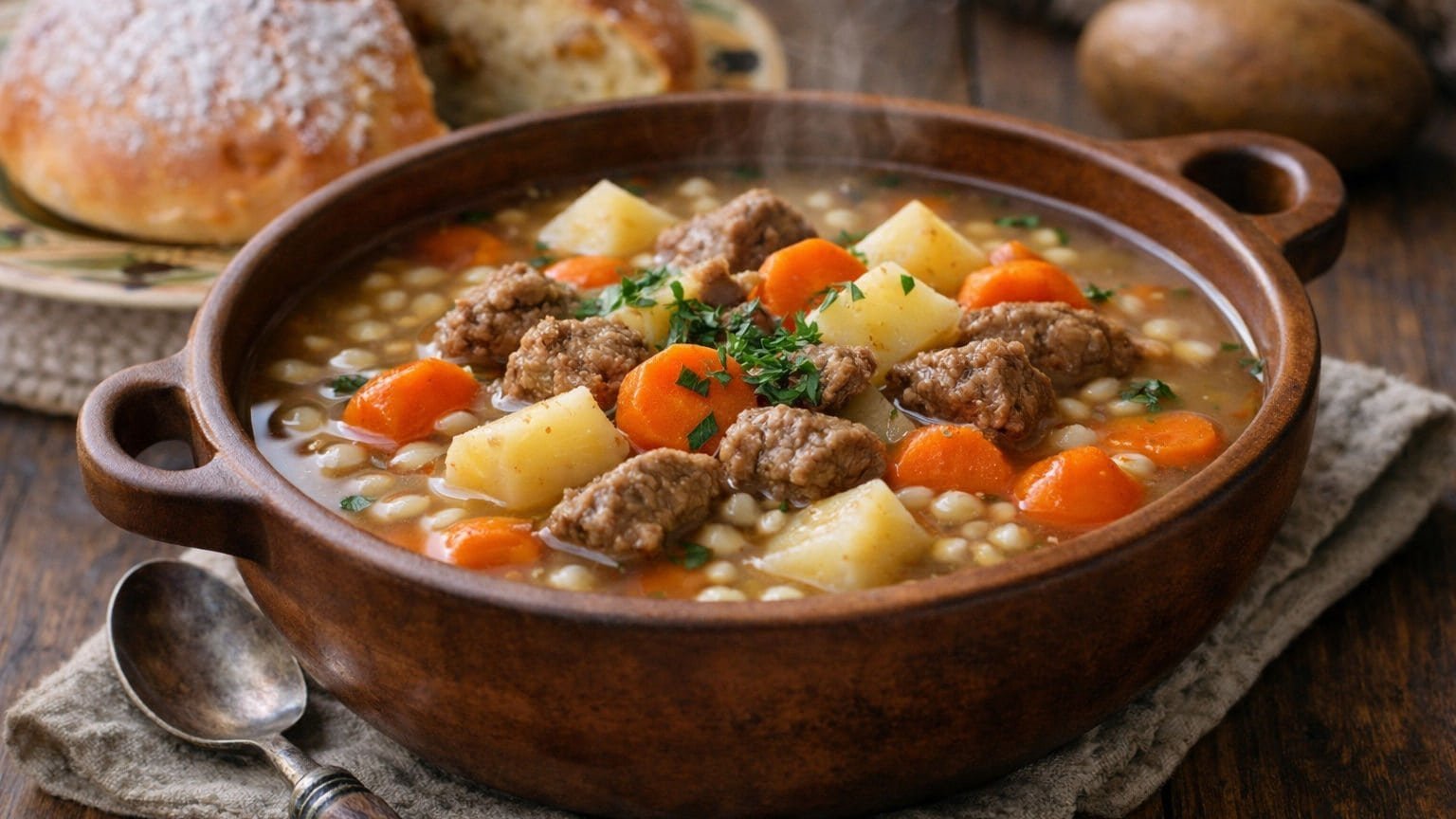
Greenlandic Suaasat
A clean, hearty Greenlandic soup with lamb, rice, potatoes, and a lightly thickened broth.
View Recipe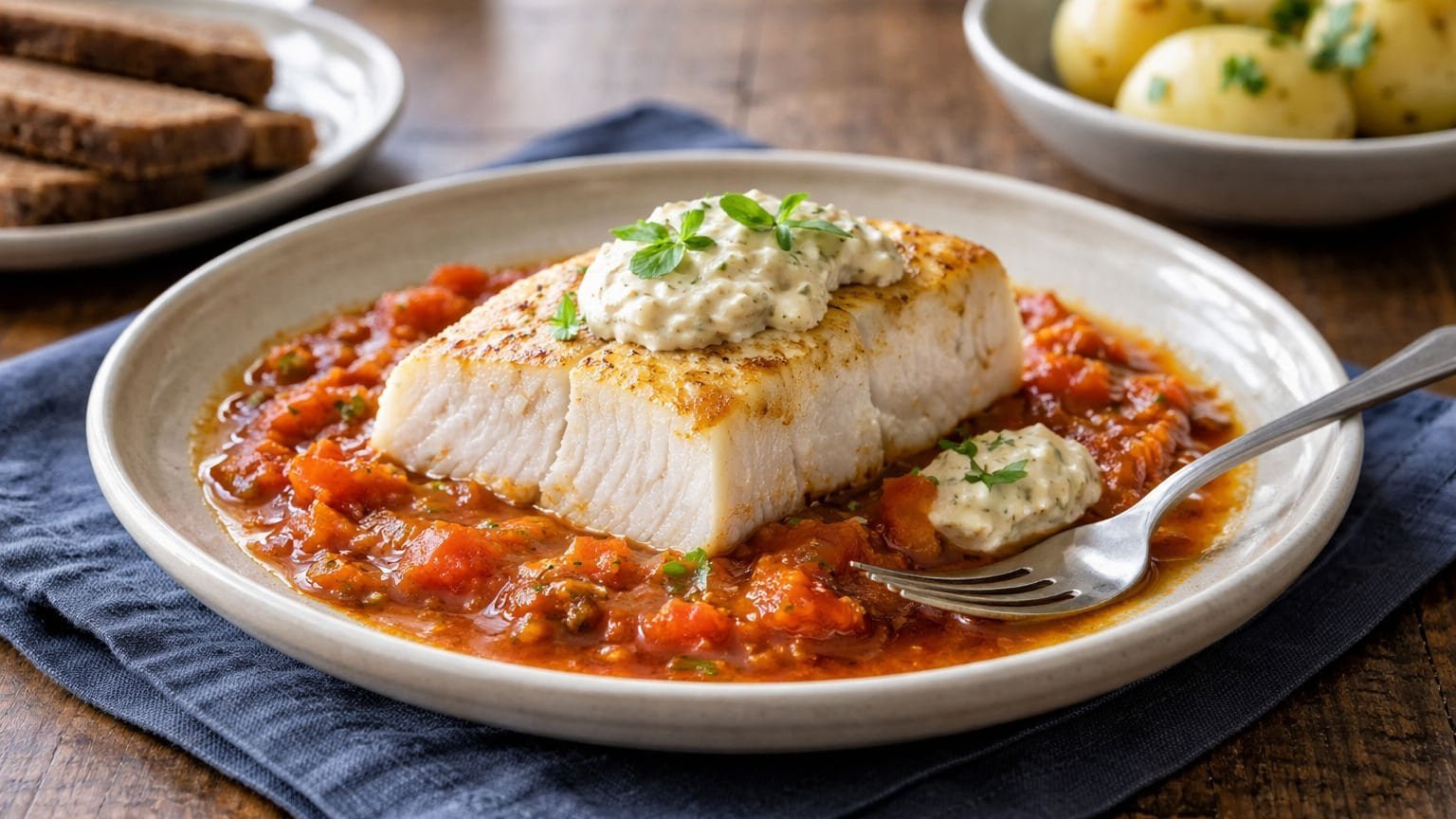
Greenlandic Halibut
Broil firm halibut and serve it over a quick tomato sauce with a spoonful of mustard cream for a clean, lightly rich finish.
View Recipe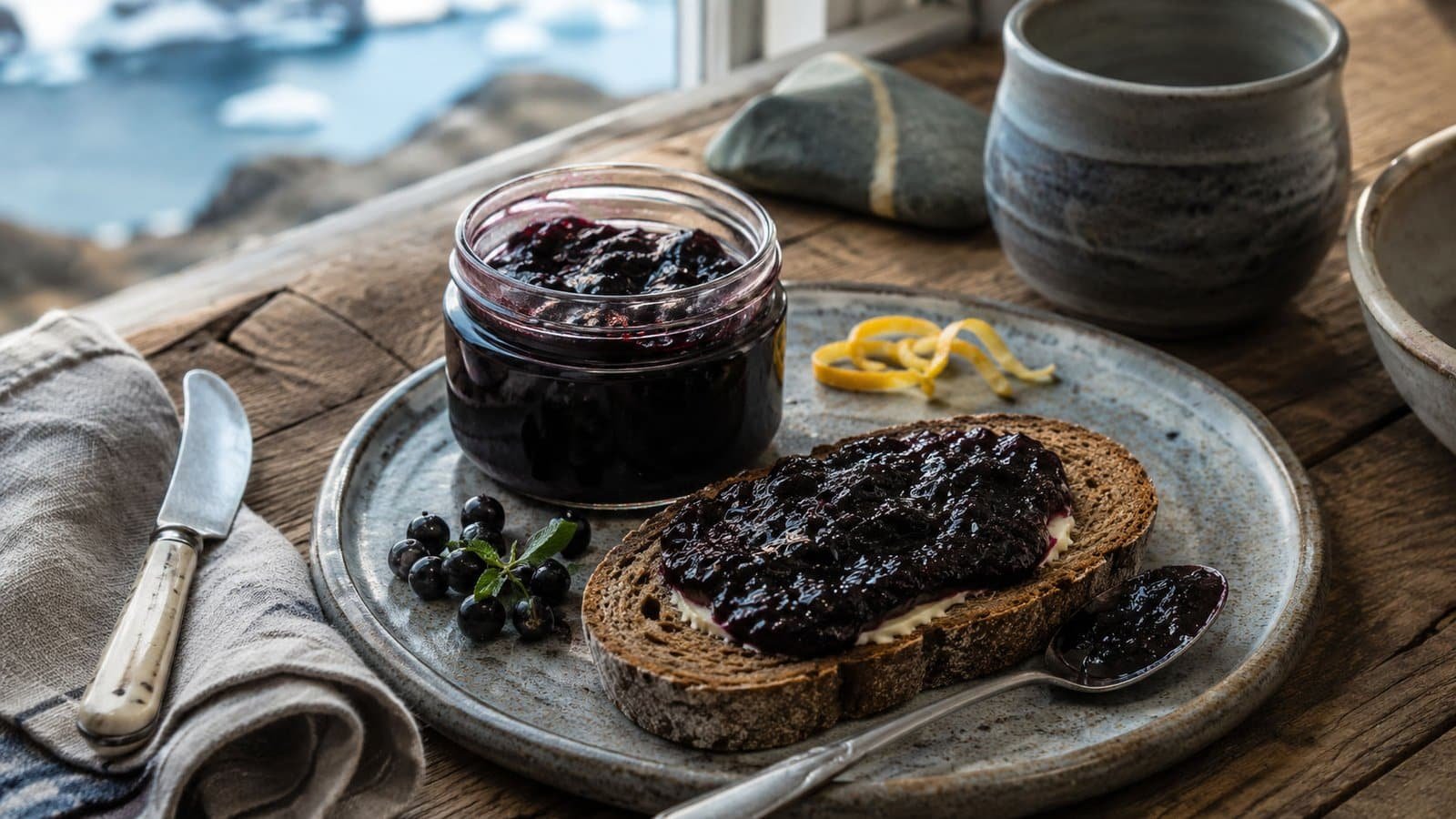
Greenlandic Paarnat (Crowberry) Jam
Wild crowberries, lemon and apple cook into a dark, tart-sweet Greenlandic jam made for bread, desserts and savory pairings.
View Recipe