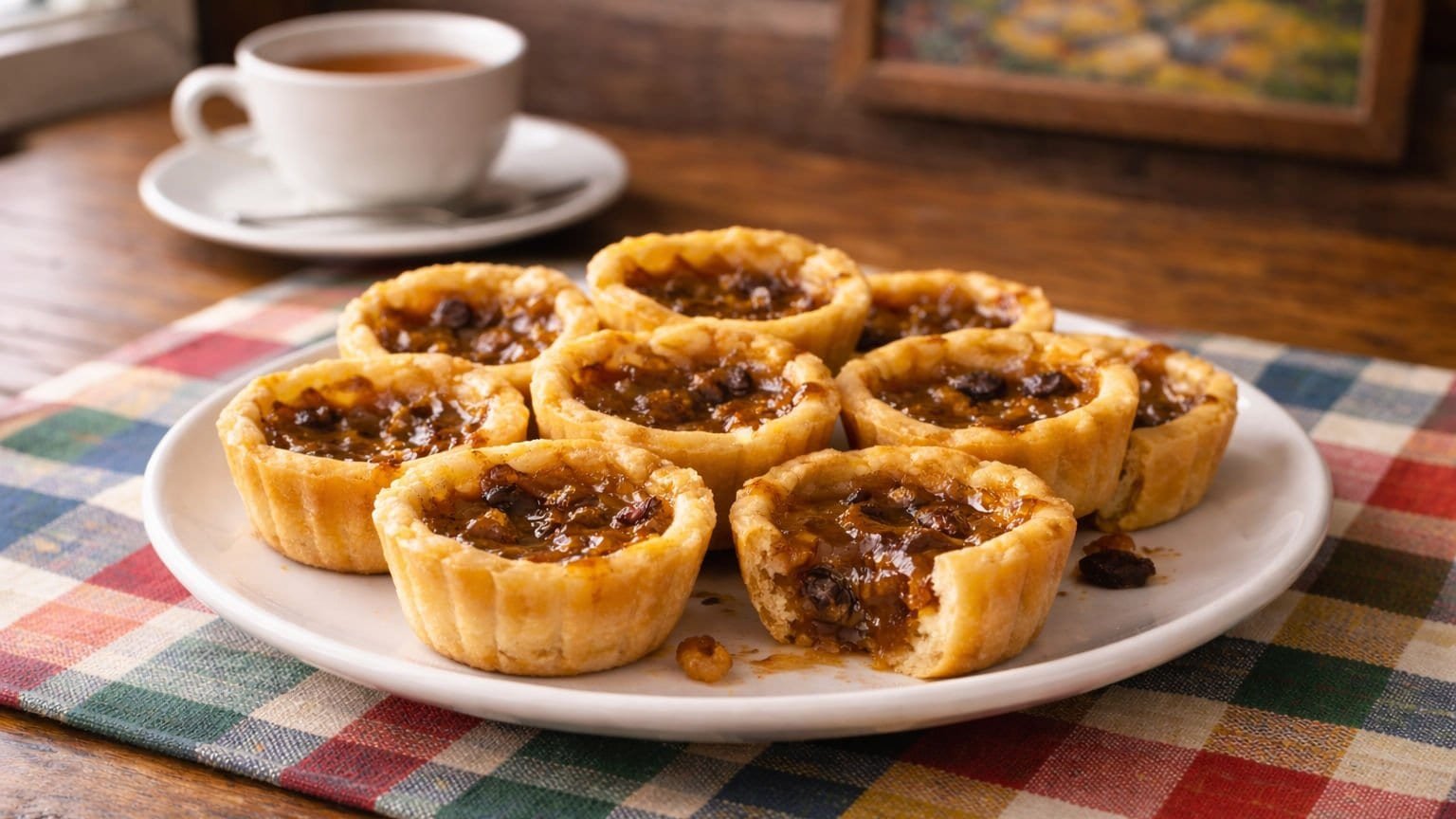
Ask Canadians how a butter tart should be made and the niceties can disappear fast. Runny or firm? Raisins or no raisins? This week, The Menu digs into Canada’s sweetest argument — then rewards everyone with three classic Canadian dessert recipes worth baking.
The great Canadian butter tart debate
A butter tart looks harmless enough: flaky pastry, a glossy filling and just enough sweetness to make a second one seem reasonable. Then someone asks whether raisins belong in it.
That’s when the Canadian debate begins.

For some bakers, a proper butter tart should have a loose, almost runny center that threatens the plate. Others want a firmer filling that stays politely inside the pastry. Raisins divide the room even faster. Pecans and walnuts have their supporters, too. There is no national tribunal to settle any of this, which is probably just as well.
What we do know is that butter tarts have deep Canadian roots. The earliest known published recipe appeared in a 1900 fundraising cookbook produced by the Women’s Auxiliary of Royal Victoria Hospital in Barrie, Ontario. Mrs. Malcolm MacLeod’s “Filling for Tarts” called for sugar, butter, eggs and a full cup of currants. By 1915, the Five Roses Cook Book printed a recipe actually called “Butter Tarts,” again with currants, plus an optional cup of dates.

So the dried-fruit camp has history on its side. Whether that makes it right is another matter. In April 2019, Canada Post even issued official stamps recognizing Butter Tarts and Nanaimo bars.
More than a century later, butter tarts remain one of those foods Canadians recognize instantly but rarely define exactly the same way. Family recipes differ. Bakeries develop loyal followings. And every variation gives someone another reason to insist theirs is the proper one.
It’s a controversy but not quite a constitutional crisis.
That combination of history, food culture and friendly disagreement is exactly the territory The Menu loves to explore. Better still, this debate comes with a delightful pastry.

Featured Country: Canada
Canada has a serious sweet tooth, and its dessert traditions go well beyond maple syrup. Butter Tarts deliver flaky pastry and gooey brown-sugar filling. Nanaimo Bars stack chocolate, coconut and a creamy center into three famously rich layers. Canadian Carrot Cake takes a more familiar route, with warm spices, carrots and cream cheese frosting.
Together, they make a persuasive case for skipping straight to dessert. Bake one, bake all three, or invite friends over and call it culinary research. Just remember: if butter tarts are involved, someone is bound to ask about the raisins!
Start Cooking: Canada
Canadian Butter Tarts
Flaky pastry and a rich brown-sugar filling. Raisins remain entirely between you and your conscience.

Nanaimo Bars
A no-bake layered bar with a chocolate-coconut base, creamy custard filling and glossy chocolate topping. Rich, sweet and irresistible.

Canadian Carrot Cake
Warm spices, tender carrot cake and cream-cheese frosting make a convincing argument for vegetables.
Food Trivia: Canada’s liquid gold

Canada’s maple syrup reputation is not merely clever branding. In 2025, Canadian producers harvested 18.9 million gallons of maple syrup — the country’s second-highest production year on record. Canada supplied more than three-quarters of the world’s maple syrup, and Quebec alone accounted for 90% of Canadian production. New Brunswick and Ontario were the next-largest producing provinces.
In other words, when the world reaches for real maple syrup, chances are excellent that a Canadian maple tree was involved. Pancakes or waffles everywhere may wish to send a thank-you note.
Food Quiz: What are Canadians pouring?

Question: Which wine style has historically been Canadians’ top choice: red, white, sparkling or rosé?
Answer: Red. Statistics Canada reported nearly $4 billion in red wine sales in 2022/23, versus about $2.7 billion for white wine; sparkling and rosé trailed well behind.
Think you know what France, Italy, the US, Spain, Canada and other wine-drinking nations prefer? Take the Worldwide Wine Trivia Quiz
Favorite Find: Escuminac Maple Syrup

Quebec-based Escuminac produces single-forest maple syrup, tapping its trees each spring when freezing nights and warmer days get the sap flowing. It’s a craft built around weather, timing and patience – and a pantry staple with uses far beyond pancakes. Not a sponsor, just a Canadian producer worth knowing. Visit Escuminac.
Share The Menu
Know someone who has strong opinions about raisins in butter tarts? Send them The Menu and invite them into the debate. Better yet, bake a batch together, compare fillings and settle the question the Canadian way: politely, over dessert, while quietly believing your version is obviously superior.