
South Korea • Regional Dish • Main Course
Bibimbap (Korean Mixed Rice With Meat)
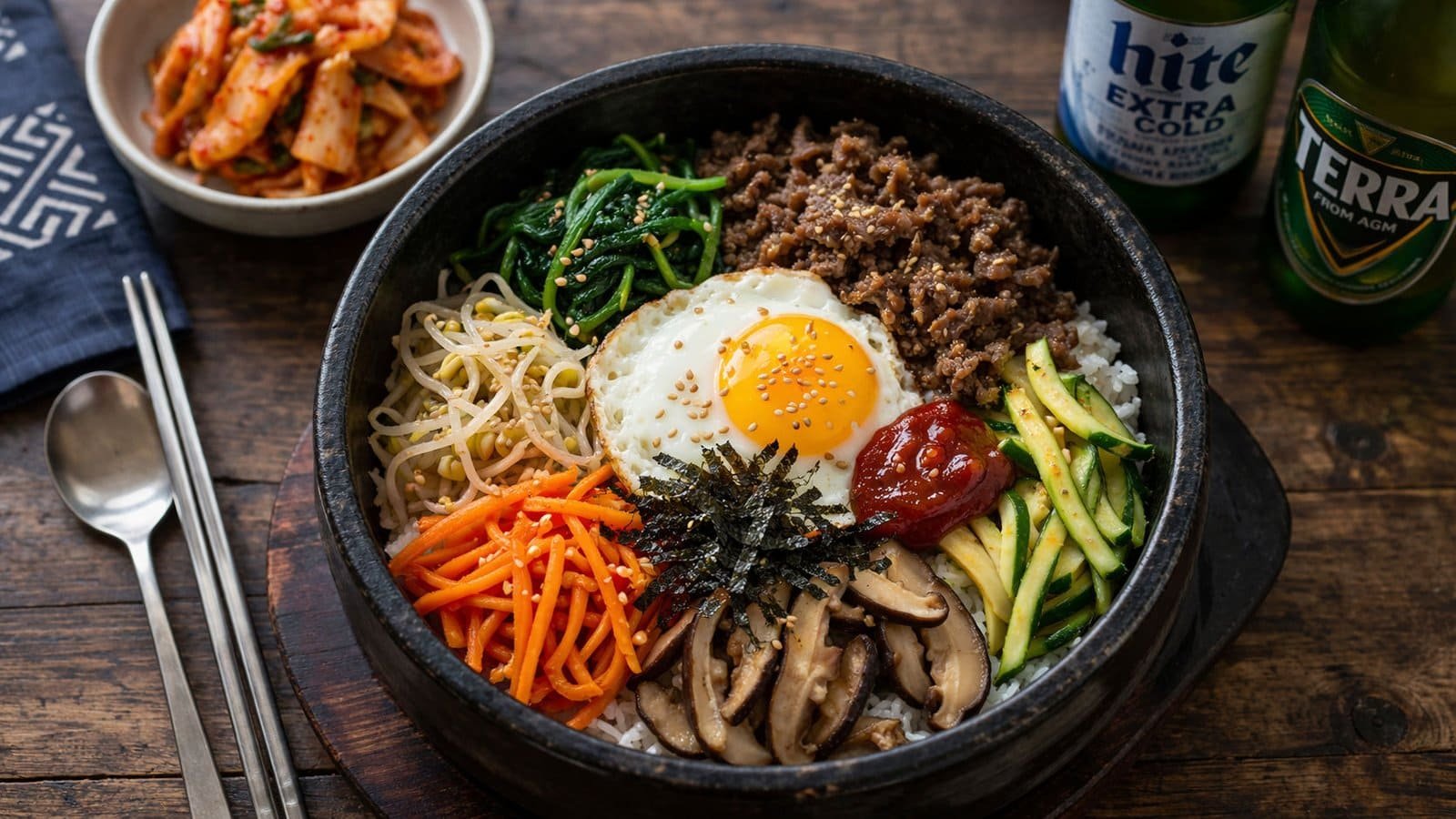
Bibimbap is Korea’s great mixed bowl: warm rice, seasoned vegetables, beef, egg, and gochujang brought together in one very smart meal.
Instructions
- Marinate the beef. In a bowl, mix the beef with the soy sauce, sesame oil, sugar, garlic, and black pepper. Set aside for 15 to 20 minutes.
- Mix the bibimbap sauce. Stir together the gochujang, sesame oil, sugar or honey, rice vinegar, sesame seeds, and water until smooth. Set aside.
- Blanch the spinach for about 30 seconds in boiling water, then rinse under cold water and squeeze out the excess moisture. Toss with half the minced garlic, 1/2 tablespoon soy sauce, 1 teaspoon sesame oil, a pinch of salt, and a little sesame seed.
- Blanch the soybean sprouts for 2 to 3 minutes until just tender. Drain well and toss with the remaining minced garlic, 1/2 tablespoon soy sauce, 1 teaspoon sesame oil, a pinch of salt, and a little sesame seed.
- Cook the vegetables one at a time so their colors stay distinct. Sauté the carrot in a little neutral oil with a pinch of salt for 1 to 2 minutes until just tender. Transfer to a plate. Cook the zucchini the same way for 1 to 2 minutes. Cook the mushrooms in the remaining oil with a small pinch of salt until softened and lightly browned, about 3 to 4 minutes.
- Heat a skillet over medium-high heat and cook the marinated beef for 2 to 3 minutes, stirring, until browned and just cooked through.
- Fry the eggs sunny-side up, keeping the yolks runny if you like.
- Divide the warm rice among four bowls. Arrange the beef, spinach, soybean sprouts, carrot, zucchini, and mushrooms in separate sections over the rice. Top each bowl with an egg and add seaweed strips if using.
- Serve with the bibimbap sauce on top or on the side. Mix everything together before eating.
Cultural Context
Bibimbap literally means mixed rice, and that is the heart of the dish: warm rice topped with separately prepared vegetables, meat, egg, and gochujang, then mixed just before eating. Traditional versions commonly include short-grain rice, seasoned namul-style vegetables, beef, and chili paste, though the exact toppings vary by household and region. Some versions are served in regular bowls, while dolsot bibimbap is served in a hot stone bowl that creates a crisp layer of rice at the bottom.
Fun Fact
Bibimbap is one of those dishes that looks highly composed right up until the moment you attack it with a spoon and turn the whole thing into a glorious, spicy mess. That is not bad table manners. That is the point.
Cook’s Tip
Use ground beef if thinly sliced steak is hard to find. Short-grain white rice is the most traditional choice for bibimbap. You can swap in cucumber, fernbrake, bellflower root, or other seasonal vegetables if available. For a vegetarian version, replace the beef with pan-fried tofu or extra mushrooms. If you want a crisp rice bottom, assemble and serve the bibimbap in a hot stone bowl. Keep each topping lightly seasoned rather than heavily sauced. Bibimbap works because everything comes together at the end, not because every vegetable shows off like it has its own publicist.
Trivia
Dolsot bibimbap is served in a heated stone bowl, which keeps the dish sizzling at the table and creates the prized crust of toasted rice called nurungji, or crispy rice, at the bottom.
More South Korea Recipes
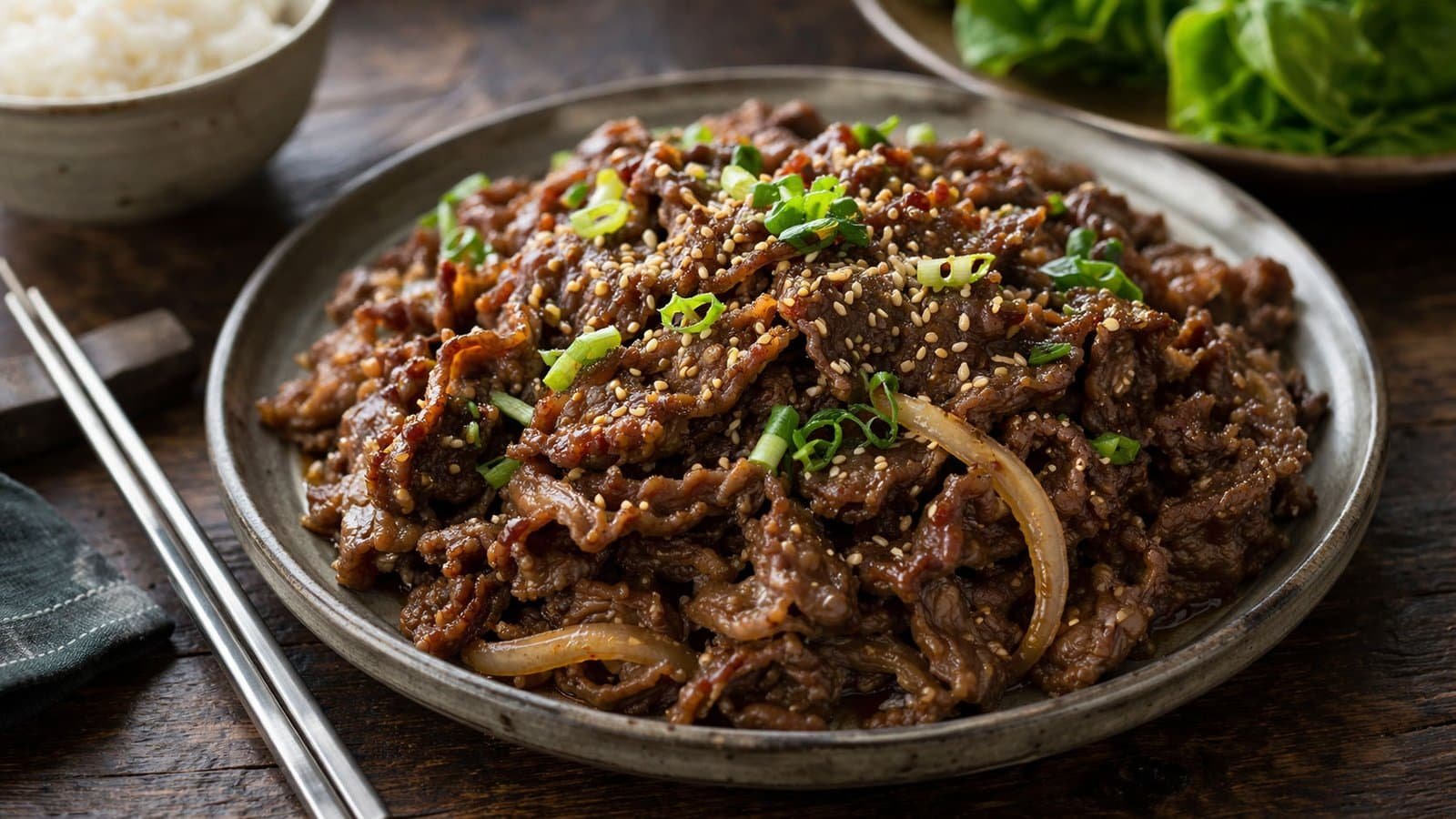
Korean Beef Bulgogi
Korean beef bulgogi is one of the great quick-payoff dinners: thin slices of marinated beef cooked fast and eaten even faster.
View Recipe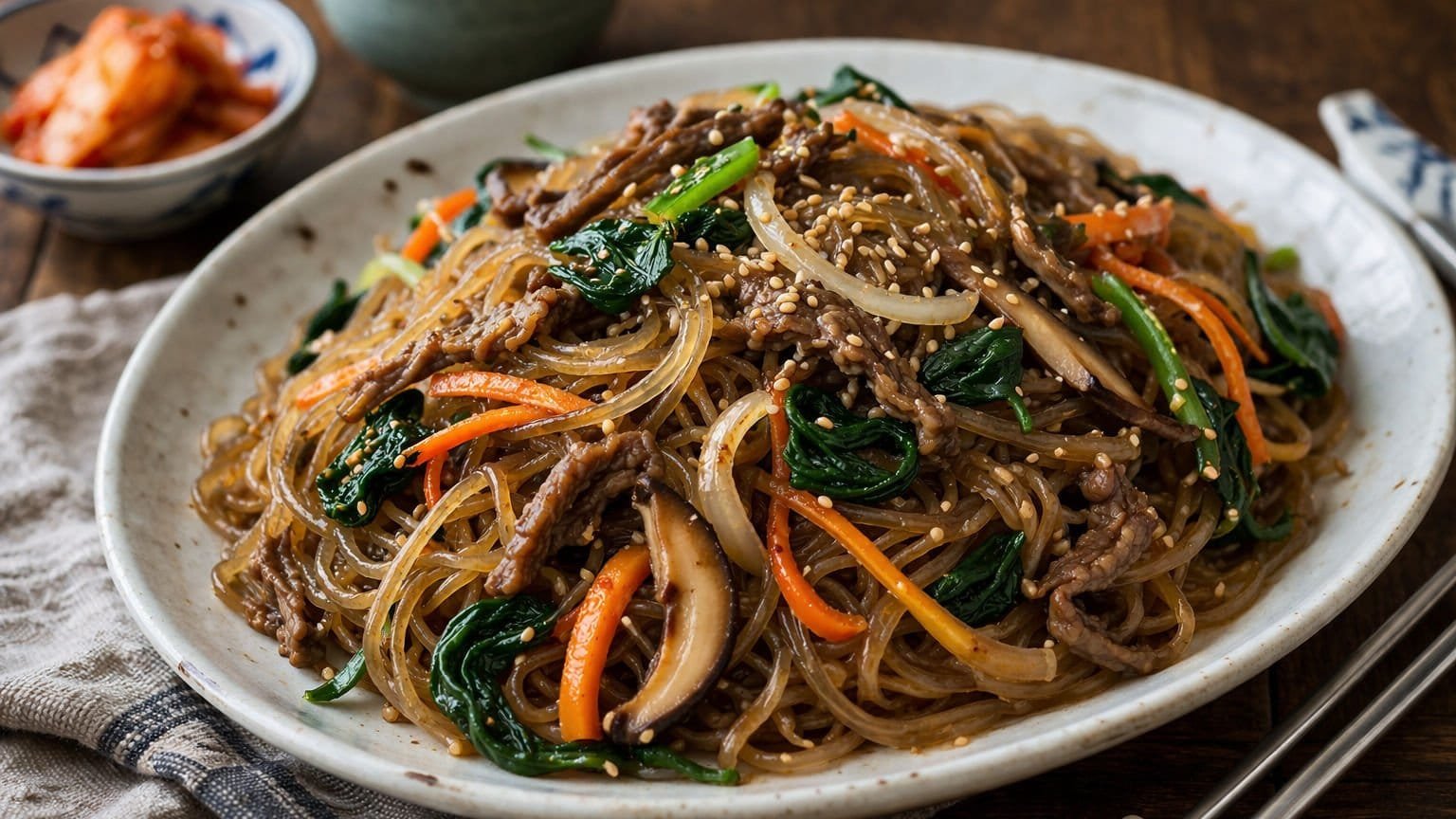
Japchae (Korean Glass Noodle Stirfry)
Japchae is Korea's glossy noodle classic: chewy sweet potato noodles tossed with beef, vegetables, soy sauce, and sesame.
View Recipe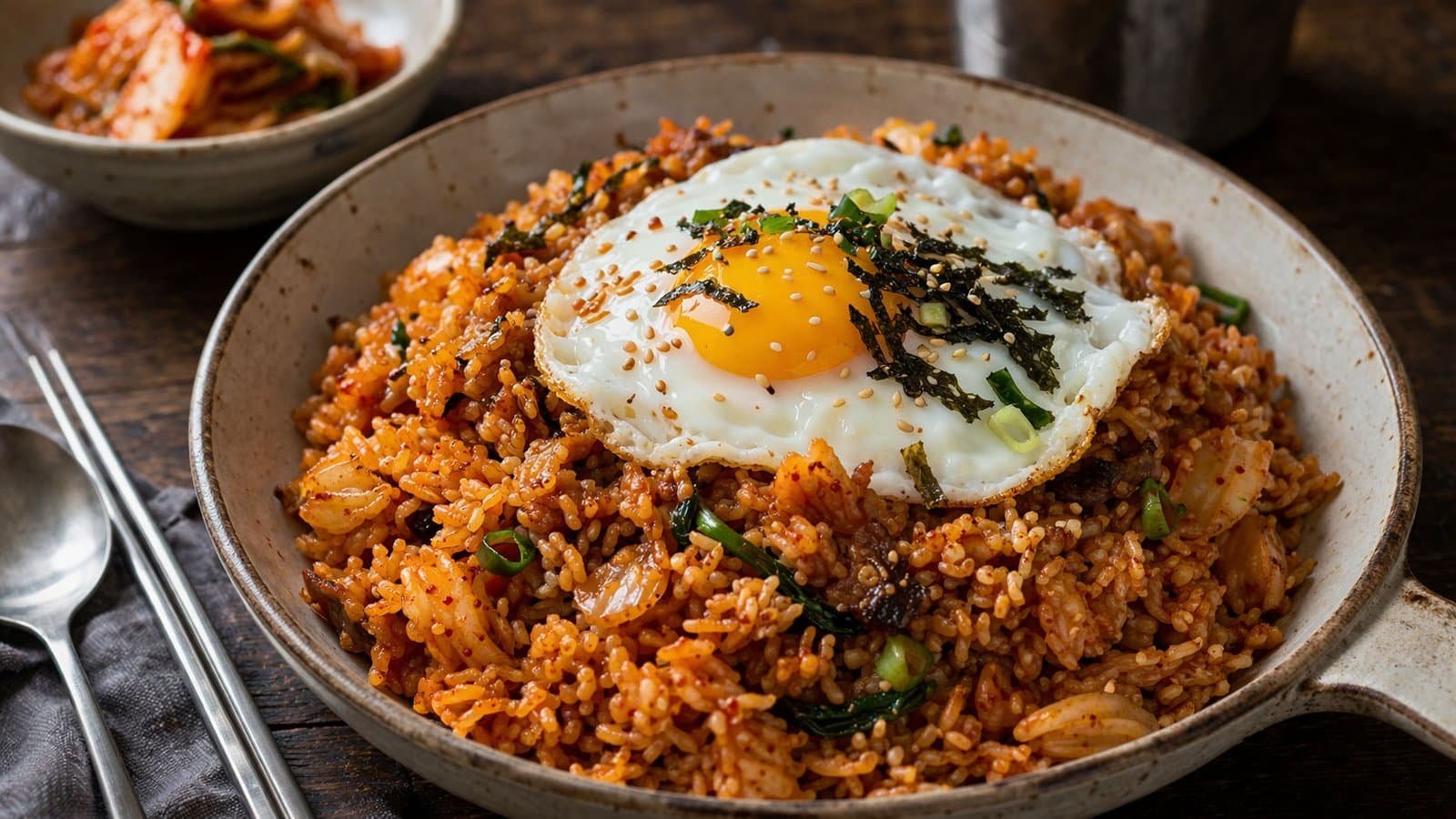
Kimchi Fried Rice
Kimchi fried rice is Korea's ultimate leftover upgrade: bold, spicy, savory rice with crispy edges and a fried egg on top.
View Recipe