
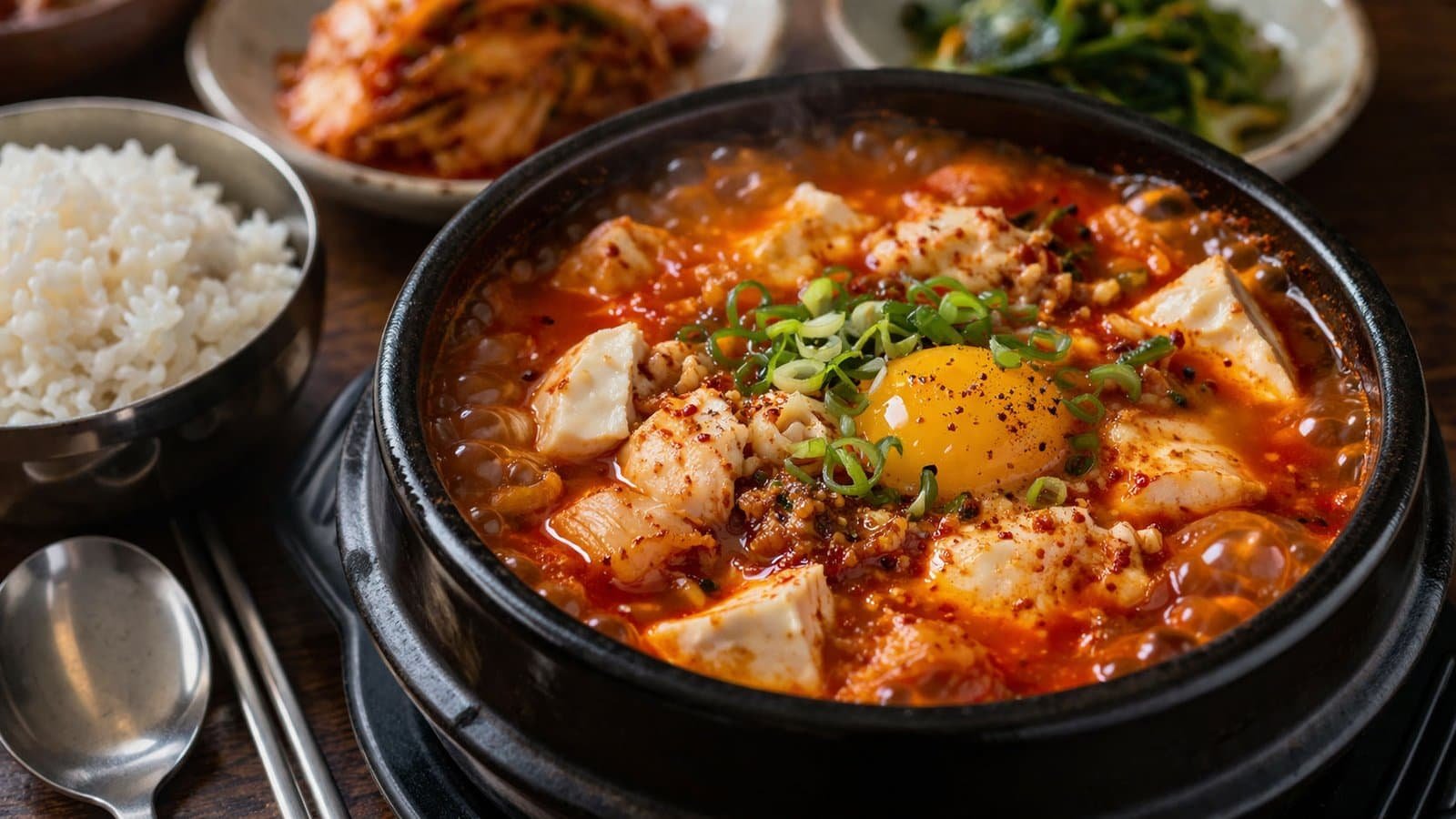
South Korea • Regional Dish • Main Course
Sundubu Jjigae (Soft Tofu Stew)
Sundubu jjigae is one of Korea's great comfort stews: bubbling broth, silky soft tofu, and deep spicy flavor in one bowl.
Instructions
- Heat the neutral oil in a small pot or ttukbaegi over medium heat. Add the pork and cook for 2 to 3 minutes until it starts to lose its raw color.
- Add the kimchi, gochugaru, garlic, and sesame oil. Stir-fry for 2 to 3 minutes until the kimchi softens and everything smells rich and spicy.
- Pour in the stock and kimchi juice. Add the fish sauce or salted shrimp, onion, and half the green onion. Bring to a lively simmer.
- Reduce the heat slightly and simmer for 4 to 5 minutes so the broth picks up the flavor of the pork and kimchi.
- Add the soft tofu in large spoonfuls or rough chunks. Do not stir too aggressively. Sundubu is supposed to look soft and craggy, not like it went through a committee meeting.
- Simmer for 3 to 4 minutes until the tofu is heated through and the stew is bubbling.
- Crack in the egg if using and cook for 1 to 2 minutes, until the white is just set and the yolk is still soft or cooked to your liking.
- Finish with black pepper and the remaining green onion. Taste and add a little more fish sauce or salt if needed.
- Serve hot, ideally with steamed rice.
Cultural Context
Sundubu jjigae is a Korean stew made with extra-soft tofu and a spicy broth, often built from anchovy-kelp stock or another light broth. Common versions include kimchi, pork, beef, or seafood, and many are finished with an egg added directly to the bubbling pot. The tofu is usually added in loose chunks rather than neat cubes, which gives the stew its signature soft, rustic texture.
Fun Fact
There is no single official formula for sundubu jjigae. Some versions lean meaty, some go seafood-heavy, and some use kimchi for extra tang, but the bubbling soft tofu core stays the same.
Cook’s Tip
Anchovy-kelp stock is traditional and adds depth to the stew, but light chicken stock works well for home cooks. Pork and kimchi are a common pairing, but you can swap the pork for beef, mushrooms, or mixed seafood. If you use salted shrimp, start small. It is powerful stuff and does not believe in subtlety. Use fully fermented kimchi for the best flavor. Fresh kimchi is better for eating straight; older kimchi is better for cooking. Extra-soft tofu is the classic choice here. Do not use firm tofu unless you are deliberately trying to annoy the stew. A ttukbaegi keeps the stew hotter longer, but any small, heavy pot will work.
Trivia
Many traditional versions use anchovy-kelp stock as the flavor base, which is one reason the broth tastes so deep even before the tofu, kimchi, or meat go in.
More South Korea Recipes
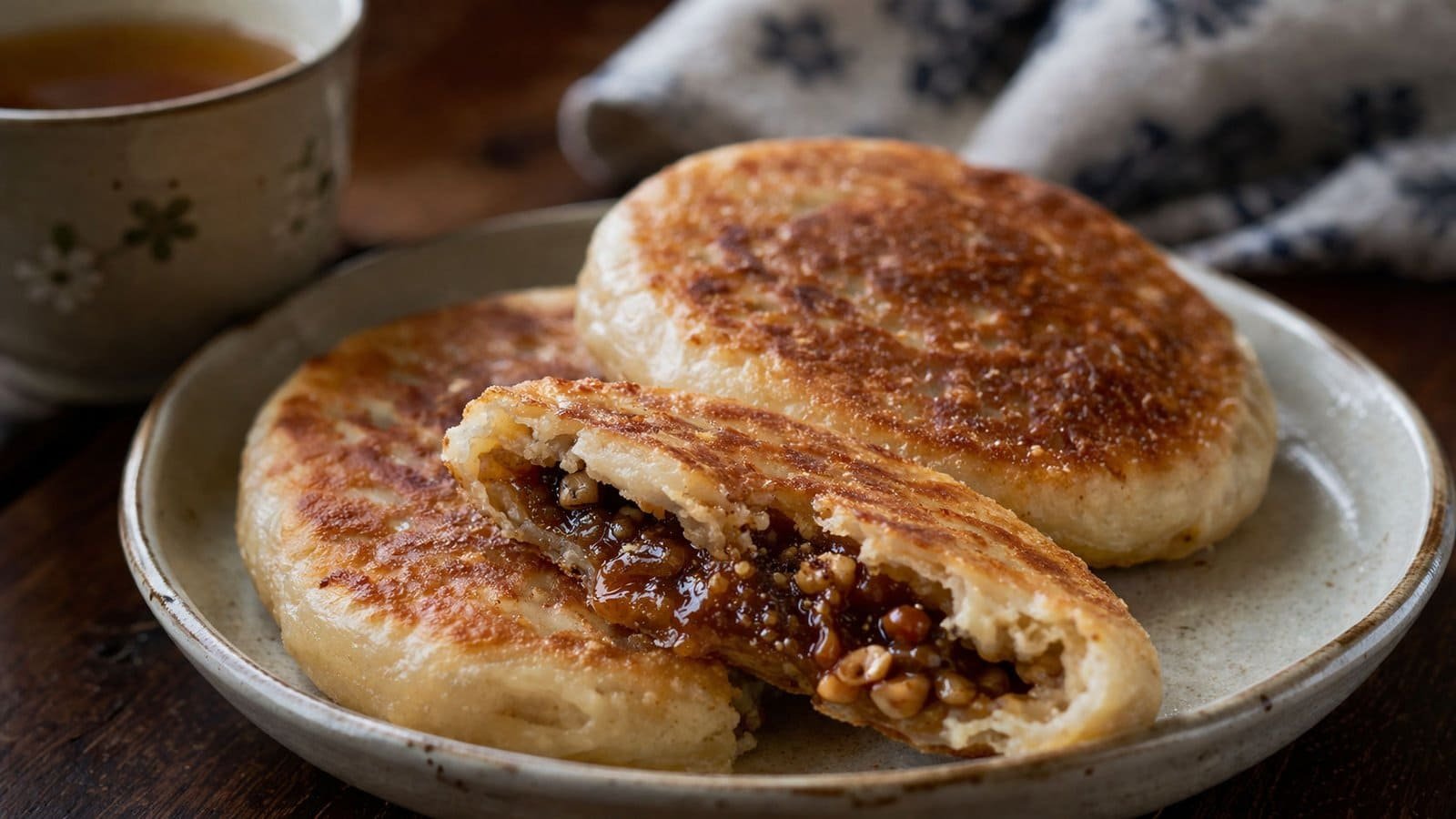
Hotteok (Sweet Korean Pancakes)
Hotteok is one of Korea's great street snacks: crisp-edged pancakes with a molten brown sugar center that rewards patience and punishes haste.
View Recipe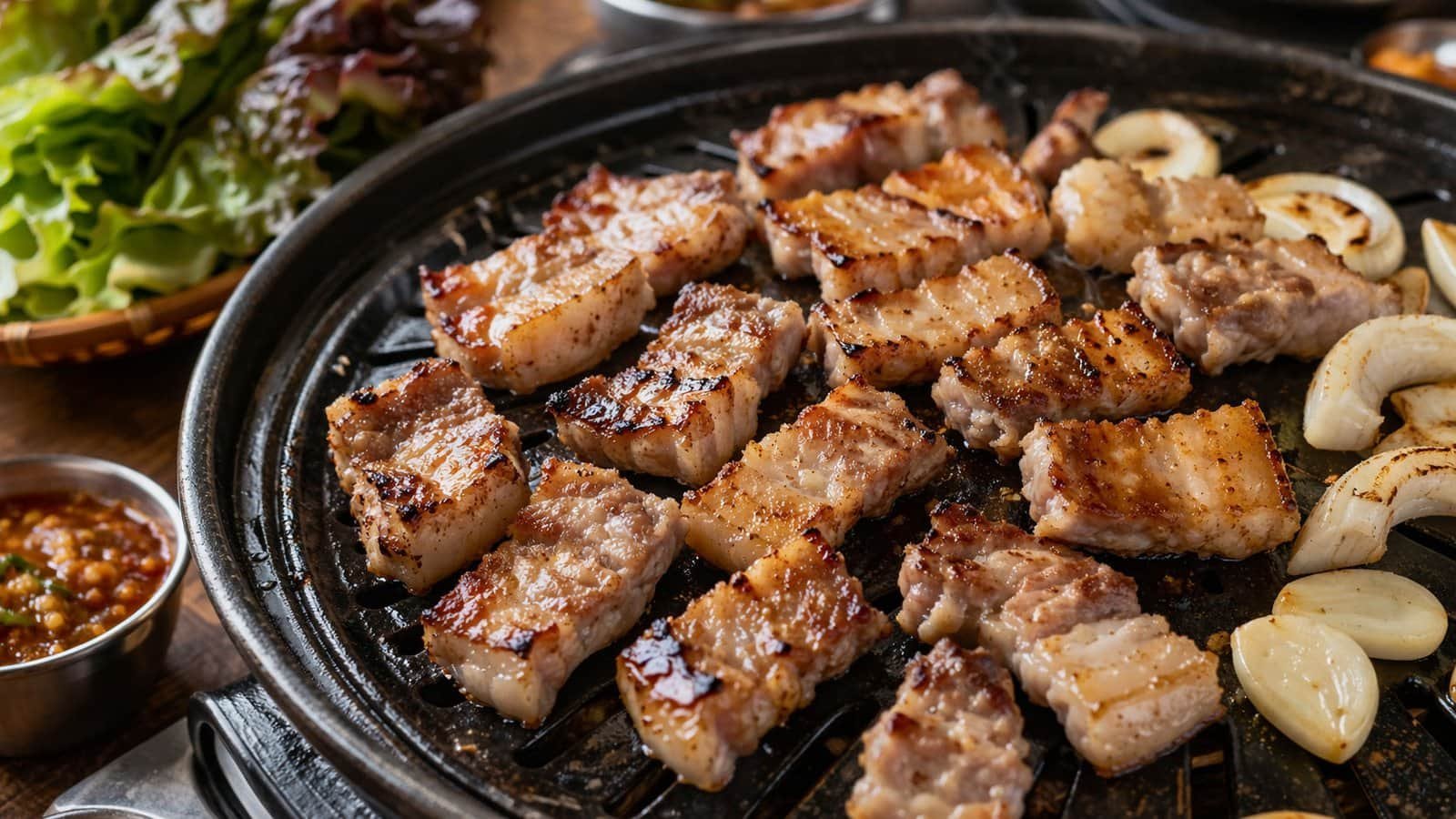
Samgyeopsal (Korean BBQ Pork Belly)
Samgyeopsal is Korean barbecue at its simplest and best: crisp-edged pork belly wrapped in lettuce with ssamjang and sharp green onion salad.
View Recipe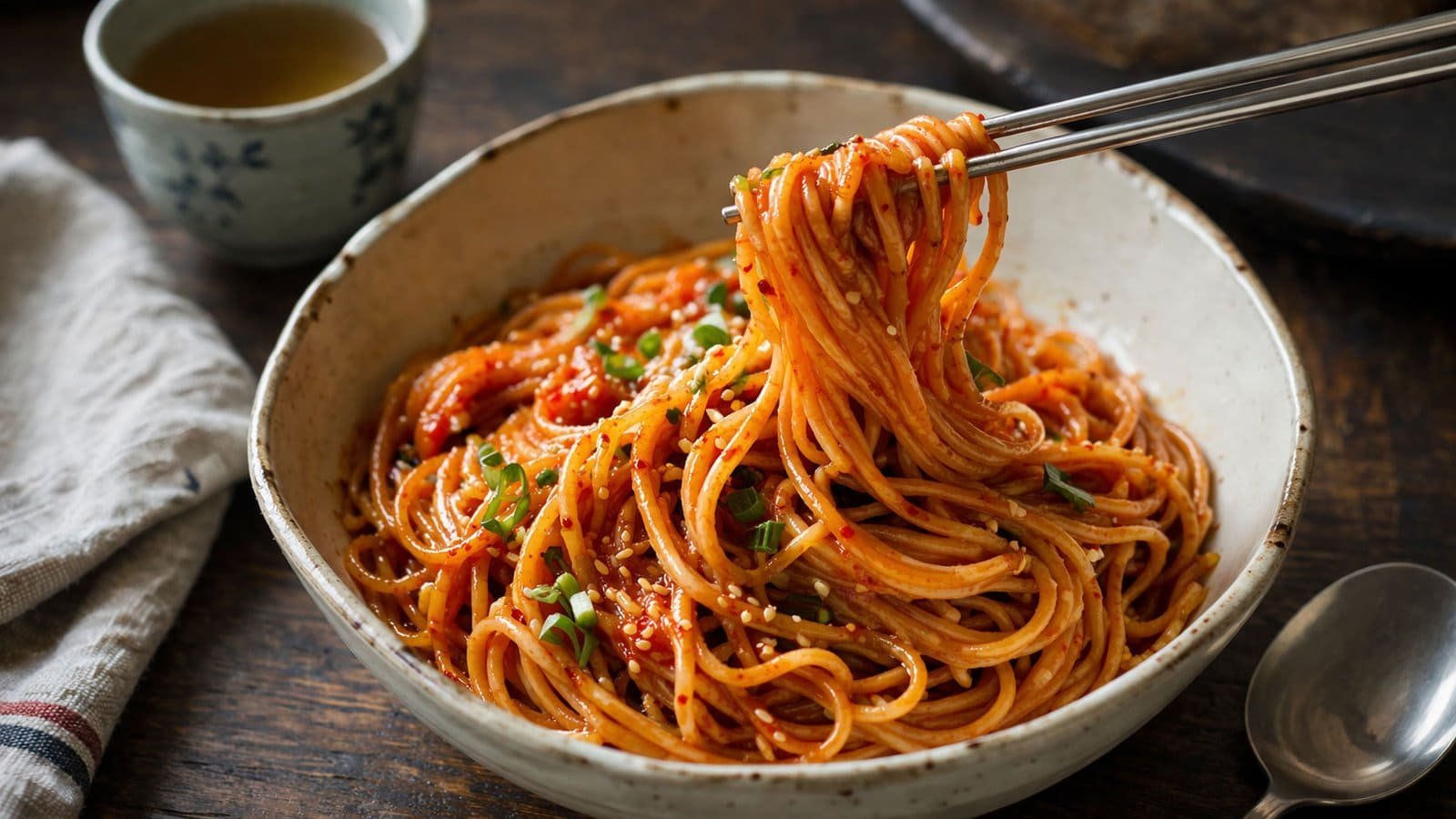
Korean Gochujang Buttered Noodles
These Korean-inspired gochujang buttered noodles are quick, glossy, spicy, and built for nights when dinner needs to move faster than your patience.
View Recipe