
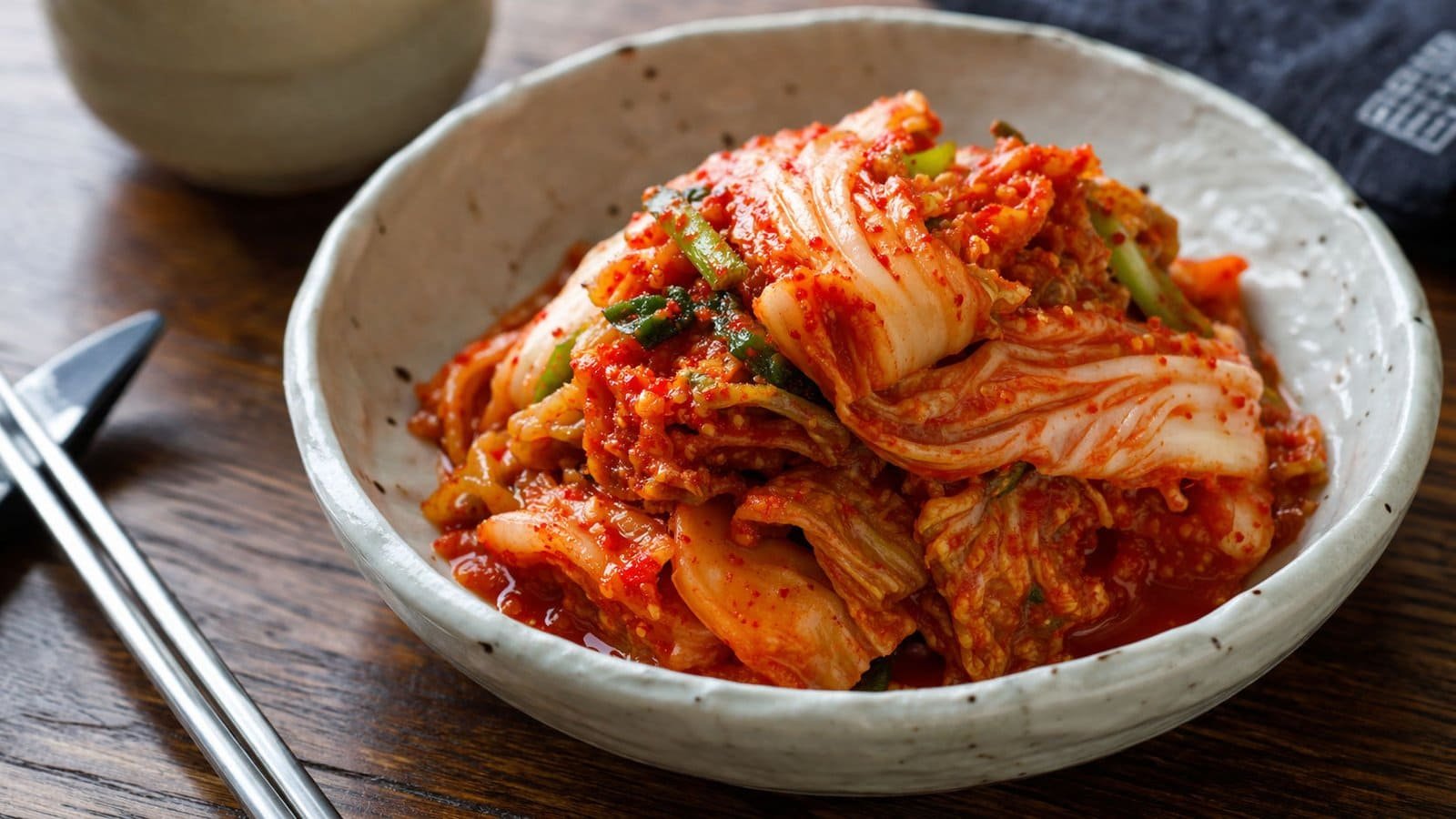
South Korea • National Dish • Side Dish
Kimchi (Tongbaechu-kimchi)
This classic South Korean kimchi recipe keeps the flavor authentic while making the process manageable for home cooks.
Instructions
- Trim the base of each cabbage and cut each one lengthwise into quarters, leaving enough core attached so the leaves stay together.
- Dissolve the salt in the water. Pour a little salted water between the leaves, then sprinkle a little extra salt closer to the thick white parts of the cabbage. Repeat until all the quarters are seasoned.
- Set the cabbage in a large bowl or tub and let it brine for 4 to 6 hours, turning once or twice, until the white stems bend easily without snapping.
- Rinse the cabbage quarters well under cold water 2 to 3 times to remove excess salt. Drain thoroughly in a colander for 30 minutes.
- Make the porridge. Whisk the sweet rice flour and water together in a small saucepan. Cook over medium heat, stirring, until lightly thickened. Stir in the sugar and cook for 30 seconds more. Cool.
- Make the seasoning paste. Blend or finely mince the garlic, onion, ginger, fish sauce, salted shrimp, and pear or apple if using. Stir this mixture into the cooled porridge. Add the gochugaru and mix into a thick red paste.
- Add the radish, green onions, and chives to the paste. Mix well.
- Wearing gloves, spread the seasoning between the leaves of each cabbage quarter, starting with the outer leaves and working inward. Use enough paste to coat every layer, but do not pack it on like wall plaster. Kimchi deserves better.
- Fold each quarter into a tidy bundle and pack it snugly into clean jars or a container, pressing down to remove air gaps.
- Leave the kimchi at cool room temperature for 1 to 2 days, depending on your kitchen, until it smells lively and lightly tangy. Then refrigerate.
- For the best flavor, chill the kimchi for at least 2 to 3 more days before serving. Slice as needed and serve cold.
Cultural Context
Kimchi is not one single recipe so much as a Korean food language. Napa cabbage kimchi, often called baechu kimchi or tongbaechu kimchi when made with larger leaf sections, is one of the best-known versions. Traditional recipes commonly use napa cabbage, salt, gochugaru, garlic, ginger, fish sauce, and salted shrimp, and many also include a sweet rice flour paste to help bind the seasoning. It’s then fermented until it turns brighter, deeper, and more complex.
Fun Fact
Kimchi often tastes different on day one, day three, and day ten. That is not a flaw. It is the whole point. As kimchi ferments, its flavor shifts from fresh and sharp to tangier and more rounded, which is why many Korean cooks use younger kimchi for side dishes and older kimchi for cooking.
Cook’s Tip
Use extra fish sauce if you cannot find salted shrimp, though the flavor will be a little less deep. Asian chives add authenticity, but extra green onions work fine. Use Korean radish if possible; daikon is the closest easy substitute. Start with 1/2 cup gochugaru for a milder batch and increase for more heat and color. Fermentation moves faster in a warm kitchen and slower in a cool one. Taste daily once it starts to bubble and smell tangy. For a simpler home-cook version, you can cut the cabbage into 2-inch pieces before salting, rather than leaving it in quarters.
Trivia
There are hundreds of kimchi varieties in Korea, including white kimchi, radish kimchi, and fresh geotjeori, which is eaten before full fermentation kicks in.
More South Korea Recipes
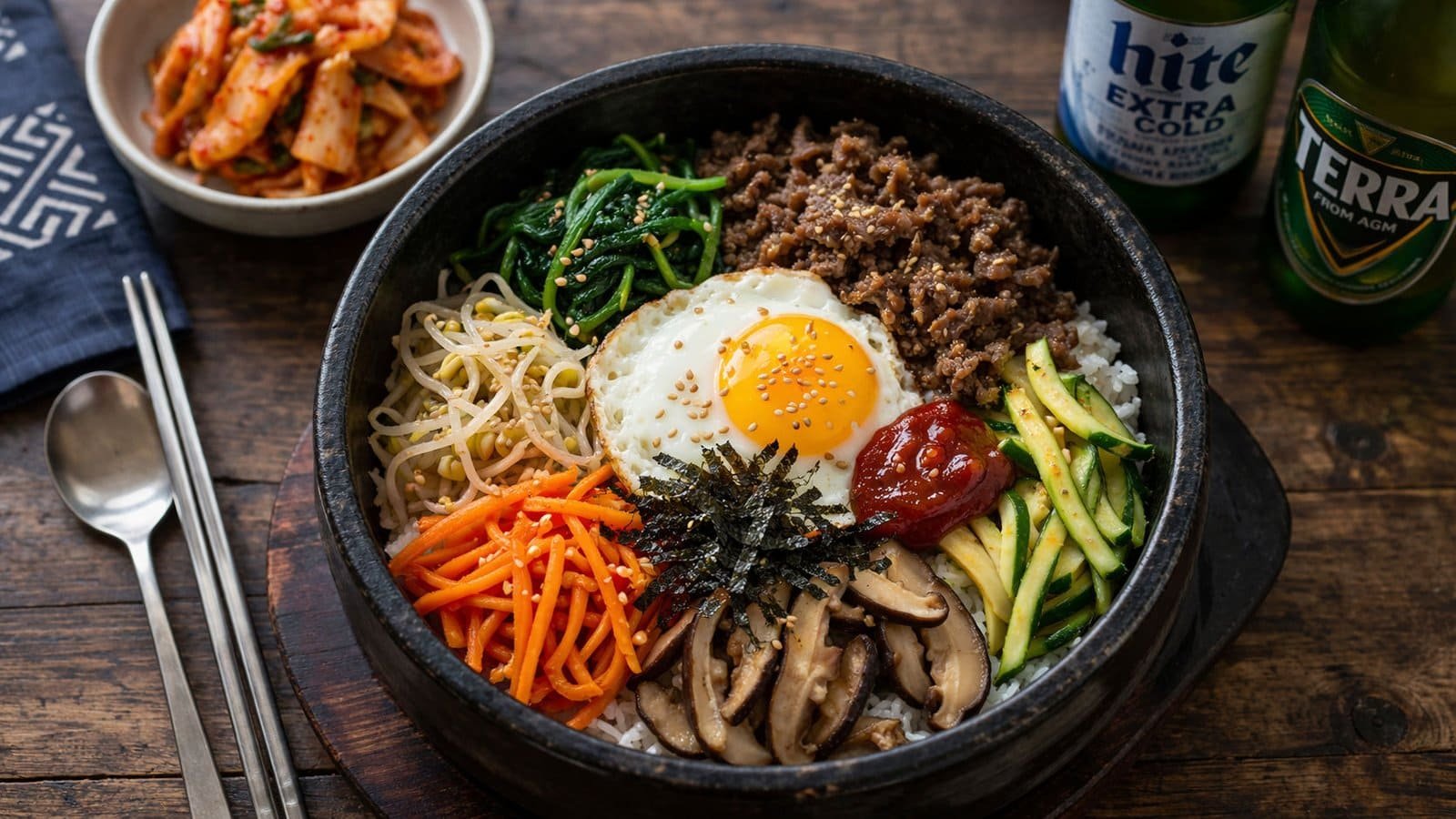
Bibimbap (Korean Mixed Rice With Meat)
Bibimbap is Korea’s great mixed bowl: warm rice, seasoned vegetables, beef, egg, and gochujang brought together in one very smart meal.
View Recipe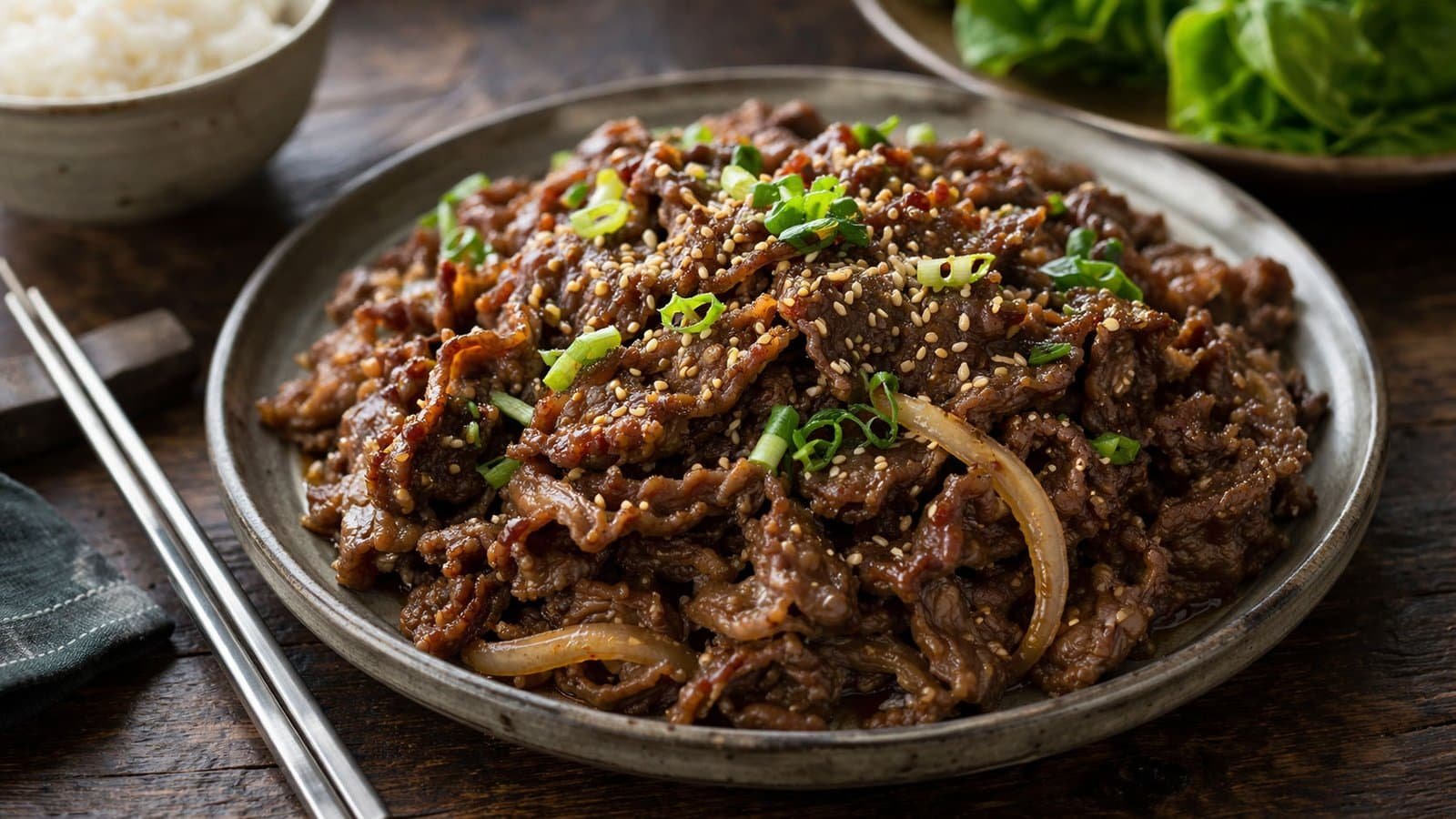
Korean Beef Bulgogi
Korean beef bulgogi is one of the great quick-payoff dinners: thin slices of marinated beef cooked fast and eaten even faster.
View Recipe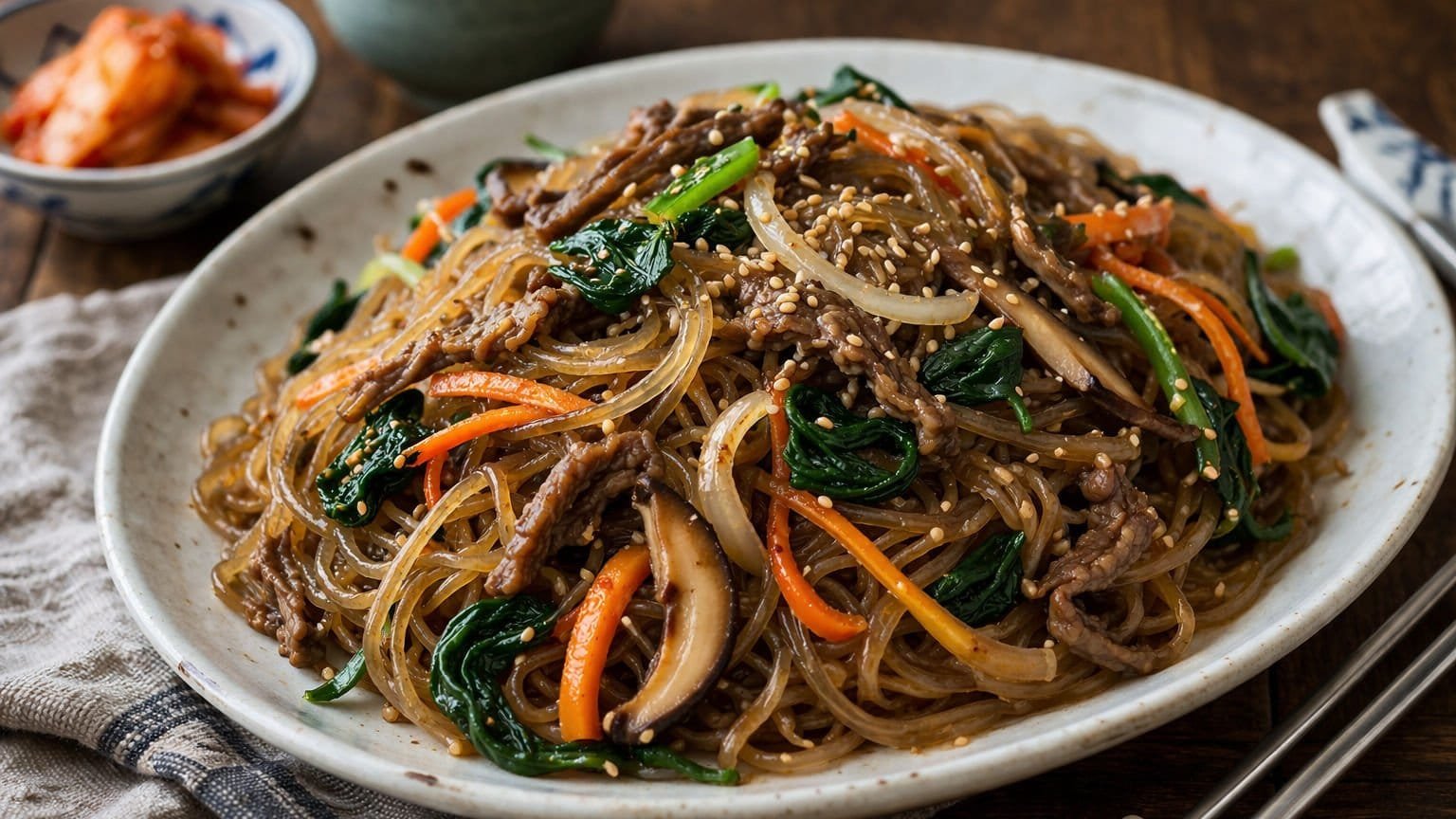
Japchae (Korean Glass Noodle Stirfry)
Japchae is Korea’s glossy noodle classic: chewy sweet potato noodles tossed with beef, vegetables, soy sauce, and sesame.
View Recipe